
RECURSOS · 25 octubre, 2026
Humor and Halloween in the Face of Fear and Death
Humor and Halloween in the Face of Fear and Death
Esteban Montilla, Ph.D.
A smiling skull, a bedsheet ghost, or a funny story told at a wake may seem out of place. However, these scenes reveal a valuable human capacity. Through humor, we can approach experiences that unsettle us, even death. For a moment, what frightens us becomes part of a shared conversation and takes a form we can play with.
Humor, festivities, and remembering the dead can offer respite and strengthen our relationships. Halloween allows us to explore this possibility through costumes, stories, and gatherings. Celebrations honoring the dead, with their cultural and religious differences, invite us to recognize how much those who have died continue to mean to us. From a pastoral perspective, both experiences raise questions about how to live more freely, care for those who suffer, and enjoy the life we still share.

Mortality and the Anguish of Knowing Our Lives Are Finite
Mortality is part of life. We see it in trees that wither, animals that grow old, and people whose lives end. Every birth begins a story with an end. We know we will die, yet we make plans, form relationships, and want to remain close to those we love. Living with both the desire to go on and the knowledge that our lives will end can cause profound anguish.
The biblical writers faced this condition directly. In Ecclesiastes 3:19–20, Qoheleth observes that human beings and animals share the breath of life and the fate of death. All come from dust and return to it. Genesis 3:19 also announces that human beings will return to the earth from which they were formed. These expressions show our place in a life we cannot preserve indefinitely.
Qoheleth extends this reflection to social and religious differences. Ecclesiastes 9:2–3 observes that death comes to those who act justly and those who do wrong, to those who offer sacrifices and those who do not. No religious standing exempts us from this condition. The psalmist, in turn, asks to learn to count our days so that we may live wisely (Psalm 90:12). Recognizing that our time is limited can help us pay attention to how we are living.
The fact that death is natural does not mean we experience it without pain. Anguish may arise when we imagine our own absence, the suffering of those who would remain, or the plans we would never fulfill. When someone we love dies, a particular relationship is also interrupted. A daily phone call no longer has anyone to answer, the family table changes, and a voice we counted on falls silent. Knowing that everyone will die does not fully prepare us for the moment when this person, whose presence shaped our days, dies.
The irreversibility of death makes this experience especially difficult. We can repair some mistakes and renew certain relationships after a separation, but death prevents us from recovering life together with the person as they were. Alongside the pain of what happened comes the sorrow of knowing that we will no longer share our lives in the same way. Acknowledging this reality takes time, sustained relationships, and the freedom to express what we feel.
Our mortality also makes protecting life more urgent. Deaths caused by violence, neglect, or lack of access to care demand responsibility and justice. Recognizing mortality commits us to addressing the conditions in which we live and die. An awareness of our shared vulnerability can help us understand why human beings have developed so many ways to face fear and support one another after someone has died.
Ways of Facing Death and Living with Absence
We turn to many different strategies when facing death. We seek information, speak with people we trust, organize ceremonies, remember, pray, or express ourselves through art. Sometimes we need to attend to daily tasks; at other times, we need to stop and cry. Humor belongs to this repertoire. Each resource acquires meaning through a person’s history, culture, relationships, and present circumstances.
One of the most concrete tasks involves reorganizing everyday life. Someone who shared decisions with a partner may now have to make them alone. A family may need to redistribute childcare, expenses, or household responsibilities. Learning to live without someone’s presence includes these small, demanding actions. Asking for help with them is also a way of caring for the life that continues.
Margaret Stroebe and Henk Schut (1999) proposed understanding grief as a movement between attending to the pain of absence and responding to the demands of a changed life. In everyday terms, we may spend a moment remembering and then turn to work, rest, or a conversation about something else. Within this model, such pauses are part of adaptation. People need room both to acknowledge the rupture in the relationship and to participate in present activities.
We also search for meaning. Robert Neimeyer (2019) explains that a significant death can unsettle what we took for granted about life and our relationships. This rupture leads us to reconsider our personal story and the meaning of what we have lived. We may ask who we are now, what we retain from that relationship, and how we wish to spend our days. In my understanding of grief, integrating this experience into our biography allows us to acknowledge both the death and the place the person continues to occupy in our story.
The search for meaning can coexist with unanswered questions. Sometimes we find no satisfactory explanation for why a death occurred, particularly when violence was involved, or a life ended too soon. Even so, we can choose how to care for those who remain, sustain a shared commitment, or devote part of our lives to a cause we consider. Meaning also takes shape through these decisions, without requiring us to regard what caused our suffering as good.
For many people, faith offers words with which to express hope, ask for strength, and share pain in community. Others find support in friendship, nature, artistic creation, or service to others. Writing a letter to someone who has died, composing a song, or gathering accounts of their life can give form to what is difficult to say. Pastoral care must respect each person’s convictions and make room for their questions, including doubt and protest.
There are also ways to prepare for our own death. We can discuss our care wishes, put our responsibilities in order, and tell people what they mean to us. These actions acknowledge our mortality and show concern for those who will continue living. When anguish or the difficulties of grief exceed our available resources, seeking professional assistance expands our options for care. Among these resources, humor can offer respite and let us rediscover, for a moment, the pleasure of being with others.

Humor and Human Wellbeing
Human beings seek joy through art, music, poetry, comedy, and play. Humor gives us a way to express what we think, feel, and hope for. Sometimes an unexpected observation is enough to ease a tense conversation. At other times, recognizing a situation’s absurdity helps us see it differently. The problem may remain, but our relationship to it changes.
Ángel Rodríguez Idígoras (2008) explains that humor can broaden how we interpret our experiences. In the same volume, Carlos Alemany and Raúl Cabestrero (2008) examine its usefulness in creating some distance from a concern and facilitating a helping relationship. That distance allows a difficulty to stop occupying our entire attention, even briefly. We may also acknowledge our mistakes with less harshness and speak about them without feeling that our worth as persons is at stake.
Research offers some encouraging findings. Wellenzohn et al. (2016) studied simple activities, such as recalling funny situations or looking for opportunities to use humor in everyday life. Participants reported improved happiness; with some activities, the benefits lasted up to six months. Changes in depressive symptoms were shorter-lived. These findings help us appreciate the value of cultivating pleasant experiences without turning them into a demand to be cheerful all the time.
Researchers have also studied responses within the human organism. Caroline Kaercher Kramer and Cristiane Bauermann Leitao (2023) brought together eight studies involving 315 participants. They found that activities eliciting spontaneous laughter were associated with greater cortisol reduction than comparison activities. Cortisol is a hormone involved in the stress response. In a review of fifteen randomized controlled trials, Li et al. (2026) found favorable results for stress reduction. However, differences among the studies and their limitations prevent us from assuming that everyone will experience the same benefit. Taken together, the evidence supports considering humor and laughter as resources for wellbeing within a broader approach to care.
Humor also has social value. Satire, which exposes shortcomings and abuses through exaggeration or ridicule, can challenge those who present their power as unquestionable. A cartoon or comedy scene can reveal the gap between what an authority promises and what it does. The hermeneutics of love and justice approaches life with attention to care and human dignity. From this perspective, it matters where laughter is directed and what consequences it brings. Exposing abusive conduct is a different undertaking from humiliating someone with fewer resources to defend themselves.
Humor Also Appears in the Bible
A solemn reading of the Bible can lead us to overlook some of its most ironic scenes. Milton Acosta (2009/2020) examines how biblical writers used unexpected situations, exaggerations, and contradictions to prompt reflection. The effect may be a smile, but it may also be the discomfort of recognizing ourselves in a character who takes themselves too seriously.
In Numbers 22, for example, Balaam cannot see the messenger blocking his path, while his donkey can. He strikes the animal because he sees it as an obstacle to continuing his journey. The scene reverses expectations. The character who receives revelations needs his eyes opened, while the animal he punishes sees what he does not. Acosta (2009/2020) identifies a comic device here that challenges the supposed expert’s confidence. This reading invites us to reconsider how easily we dismiss someone who understands something we have not yet noticed.
In the story of Jonah, the irony becomes particularly sharp. The prophet knows God’s mercy and resists his mission precisely because of it. When Nineveh receives compassion, he becomes angry. Later, he rejoices in a plant that gives him shade and becomes indignant when it withers. The contrast between his concern for the plant and his resistance to sparing a city exposes a highly selective compassion (Jonah 4; Acosta, 2009/2020). We may smile at the contradiction and then ask whom we ourselves exclude from our concern.
These narratives show that humor can contribute to serious reflection on life. Ecclesiastes also acknowledges a time to weep and a time to laugh (3:4). Proverbs 17:22 connects joy with wellbeing through a medical image. These expressions of wisdom about human experience were written in settings that predate clinical research. Their pastoral value lies in recognizing that joy belongs in life and that constant solemnity cannot express the fullness of our humanity.
Halloween and Playing with Our Fears
Halloween is celebrated on October 31. Its name comes from the English expression All Hallows’ Eve, meaning the eve of All Saints’ Day. In the Catholic calendar, November 1 is All Saints’ Day, and November 2 commemorates the faithful departed on All Souls’ Day. These dates are related, each with its own meaning. Historian Nicholas Rogers (2002) traces Halloween’s development through Celtic traditions, Christian celebrations, and popular customs that changed with migration and urban life. The holiday we know today has transformed over time.
That history brings together remembrance of the dead, beliefs in supernatural presences, pranks, and costumes. Over time, children’s parties, candy exchanges, and commercial entertainment became more prominent (Rogers, 2002). To understand a particular celebration, we need to consider what its participants do and what those activities mean to them. A family making costumes to visit their neighbors may seek a joyful encounter, without giving the activity religious meaning.
A costume allows us to portray what frightens us. A ghost can become the neighbor waving from the doorway, and a skull can dance or ask for candy. Something threatening appears in a setting recognized as play. In this symbolic reading of Halloween, imagination allows us to make fun of death.
Imagine that death arrives at midnight to find us. It walks through the streets, certain it will recognize our faces, but instead encounters vampires, witches, fantastic animals, and skeletons. It looks for a person and finds a character. It approaches someone else, only to be confused again by a mask. With so many people in costume, death no longer knows whom to take. While it tries to make sense of its bewilderment, we keep playing.
In this fiction, once midnight passes, we celebrate that death didn’t recognize us and that we will live another day, perhaps another year. Candy, bread, and shared drinks are part of the celebration. We can imagine death leaving without having accomplished its purpose, while people return home, remove their costumes, and give thanks that they can still be together. This imaginary victory expresses a deeply human desire for more time.
Play allows us to represent anguish and give it a different ending, at least for one night. We know that a costume cannot stop death. Because we know our limits, we can enjoy the fiction of having confused them. Laughter arises from that shared understanding. We are still here; we can share food and have another opportunity to love one another. Celebrating another day or another year expresses that joy more than any guarantee about the future.
Andersen et al. (2020) studied 110 visitors to a haunted attraction. They found that enjoyment was greatest at intermediate levels of fear. Excessive fear reduced enjoyment. The research took place in an entertainment setting, but it helps explain why some people seek a scare when they can experience it as part of a game. Drawing on these findings, we can consider how certain Halloween activities offer opportunities to experience fear within limits that participants choose and share.
Those limits deserve respect. A child may enjoy an illuminated pumpkin yet feel overwhelmed by a mask. An adult may prefer a gathering without scenes of violence. Giving people the freedom to participate, stop, or leave keeps the celebration recreational. Forcing someone to endure a scare turns some people’s enjoyment into someone else’s distress.
Candy and shared food can also express hospitality. Offering something pleasant, acknowledging nearby residents, and setting aside time to play are simple actions that add a human dimension to the celebration. In this reading, a sweet can symbolize the pleasure of continuing to live. That meaning comes from the encounter and what people share, not from food’s power to resolve their fears.
La Catrina and the Art of Calaveras
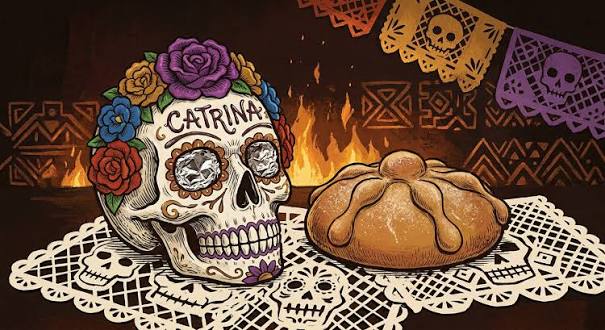
In Mexican art, La Catrina offers another way to view our mortality. Her elegance is striking because a skeleton lies beneath the hat and dress. This combination makes her a great equalizer. Wealth, office, fame, and titles may distinguish people in life, but they do not grant an endless existence. The skull reminds us of our shared vulnerability.
The figure has a specific artistic history. José Guadalupe Posada created the image of a female skull wearing an ornate hat, known as La Calavera Garbancera. Diego Rivera drew on that image in his 1947 mural, Sueño de una tarde dominical en la Alameda Central, and helped establish the figure of La Catrina we recognize today. The Museo Mural Diego Rivera places this representation within the painter’s tribute to Posada and his portrayal of Mexican history (Instituto Nacional de Bellas Artes y Literatura, 2024).
The image’s power also lies in its irony. The dress displays social distinction, while the skeleton reveals what no outward appearance can conceal. We can read it as a critique of vanity and claims to superiority. In the face of death, the person giving orders shares the same fate as the person receiving them. This reading resonates with Ecclesiastes 9:2–3, where differences in conduct and religious practice do not remove the common fate.
Posada’s calaveras circulated within a world of popular print. Broadsheets brought images and words together to reach readers in the street. Antonio Vanegas Arroyo’s printing house published news, songs, stories, and Day of the Dead calaveras. The exhibition José Guadalupe Posada: Transmisor documents the relationship among printmaking, publishing, and everyday culture (Museo Nacional de Arte, 2013). The skull thus belonged to a public conversation in which art could entertain and comment on what was happening in society.
In calaveras literarias, this conversation takes the form of verses imagining the deaths of people who are still alive. Death may come looking for a politician, argue with a teacher, or encounter someone who keeps practicing a trade even in the cemetery. Exaggeration can expose a habit, a contradiction, or an abuse. In her study of political calaveras printed between 1917 and 1928, Grecia Monroy Sánchez (2026) shows their poetic richness and their capacity to express critical perspectives on the final phase of the Mexican Revolution. These brief literary works use mortality to speak about social life.
Printmaking and poetry thus turn the skull into a figure we can converse with. Death comes to dance, bargain, or make a fool of itself. As with costumes, imagination lets us approach a reality that is hard to face directly. La Catrina reminds us that the powerful will also die. That final equality invites us to look more urgently at present inequalities and ask how we treat those who share a finite life with us.
Remembering Those Who Have Died
Festivities dedicated to the dead bring us closer to another dimension of human experience. We remember in order to keep alive the stories of those who have been part of our lives. A recipe, a photograph, or a familiar expression can bring back something of the relationship we shared. The absence remains, while we also recognize that the person continues to be part of our biography.
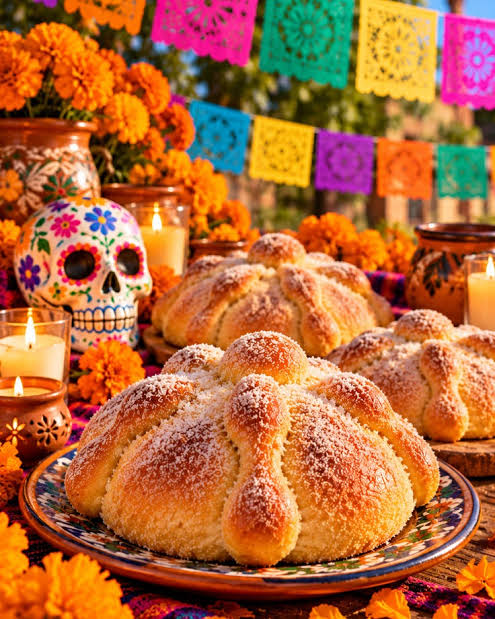
In Mexico, Day of the Dead celebrations blend Indigenous traditions with elements of the Catholic calendar. UNESCO (n.d.) describes these festivities as practices of encountering deceased family members, celebrated between late October and early November, with variations across communities. Offerings, flowers, and food preparation carry meaning within those histories and beliefs. Their proximity to Halloween on the calendar allows for contact and exchange, while each celebration retains a cultural history that deserves to be understood.
For some families, preparing a dish someone who died enjoyed or gathering at their grave honors them. While cooking or talking, older family members may tell younger ones how the person lived, what concerned them, and what made them laugh. This sharing lets new generations get to know someone they may have died before they had the chance to meet. Remembrance also preserves the person’s everyday humanity, including their wit, mistakes, and affections.
From an integrative understanding, grief involves the human organism in its entirety. The relational rupture caused by death can alter sleep, habits, expectations, and the way we live our faith. Integrating this experience into our biography means finding ways to live with what happened and with what the relationship continues to mean. A shared celebration may offer an occasion to do so, according to each person’s needs and preferences.
Humor at Funerals in the Face of Irreversible Death
At funerals, too, we tell jokes and make one another laugh. Sometimes we remember the distinctive way the person spoke, a mischievous moment, or a reply that still surprises us. When laughter grows from affection and is received with respect, it can help us face an irreversible reality. The person has died, and we cannot recover their presence in everyday life. In acknowledging this, memory brings back something of what we enjoyed together.
Laughter does not necessarily minimize pain. It may arise precisely because it hurts to recognize that we will never again hear that witty remark in the voice of the person who used to say it. In retelling it, we share both the joy of remembering and the sorrow of absence. Tears and smiles may follow one another within the same conversation. Honoring someone involves remembering their life beyond the illness, accident, or circumstances of their death.
In interviews with people whose spouses had died, Dacher Keltner and George Bonanno (1997) observed that certain expressions of laughter were associated with fewer unpleasant emotions and positive aspects of their relationships. The interviews took place six months after the death. The study does not establish that laughter caused these differences, but it helps us recognize that pain and joy can coexist during grief. Laughing is neither an obligation nor a measure of love for the person who died.
At a wake, humor can also offer a brief respite to those who have spent hours under considerable strain. A shared story can help people look at one another, talk, and recognize they are in this together. Tears may then return. This movement reminds us that no single expression fully describes a person’s grief.
Timing and relationships matter. Someone telling a story needs to pay attention to how those most affected receive it. Some will want to remember with humor; others will need silence. If a joke causes discomfort, stop. Humor matters when it sustains the shared experience and makes room for all its expressions. In this way, it can help us integrate death into our biography and learn to live with absence.
Laughter That Respects and Cares
Humor can bring people closer, but it can also hurt them. Alemany and Cabestrero (2008) caution that its usefulness in a helping relationship depends on sensitivity toward the person receiving the intervention. A witty remark can open a conversation when trust exists. The same words, at another moment or spoken by someone else, may be experienced as contempt. Wanting to make people laugh does not release us from responsibility for the effects of our words.
In everyday life, this responsibility requires considering whom a joke targets. Turning a disability, an illness, someone’s background, or their suffering into a source of amusement can reinforce exclusion. Differences in power also matter. When a supervisor, teacher, or religious authority makes a joke, people may laugh to avoid an unpleasant consequence. Their laughter does not prove that they feel respected.
Caring humor leaves room for someone to say, “That makes me uncomfortable.” If a joke hurts, we need to listen, acknowledge its effect, and change our behavior. Saying “it was only a joke” does not repair the harm. Proverbs 26:18–19 even challenges the person who deceives a neighbor and then tries to excuse the behavior by claiming they were joking. Responsibility for our actions remains when we are trying to entertain.
In pastoral care, joy needs freedom. We can welcome a funny story, share a smile, or make an encounter pleasant without demanding that anyone change their mood. Some times call for light conversation; others call for listening to pain. When someone needs medical, psychological, or social assistance, humor can be part of a humane way to address those needs.
The Responsibility Not to Condemn Play
It is saddening when ideas about the devil or demons are used to judge people who participate in these games. A child wearing a costume, a family sharing candy, or someone painting a skull on their face may be expressing creativity, affection, or enjoyment of a tradition. Attributing evil to them without listening to what they do or what the activity means to them turns an occasion for connection into a source of suspicion and condemnation.
An image’s meaning also depends on the story in which it appears. A skeleton drawn on paper, a Catrina in a mural, and a ghost costume may belong to art, satire, or play. Interpreting these expressions requires knowing their context. The hermeneutics of love and justice directs us to listen to people and examine the consequences of their actions, rather than attribute intentions to them based on an isolated image.
Those who prefer not to participate retain that freedom. The same consideration is due to those who find in the celebration a way to spend time together and face their fears. From a pastoral perspective, it is troubling when children are frightened with spiritual threats or families are shamed for a recreational activity. We can express our convictions without treating a neighbor as if they were serving the devil. Care shows in the dignity we protect and how we treat people.
Conclusion
Death belongs to our condition as living beings, but its naturalness does not remove the anguish it can cause. The biblical writers recognized this limit when they spoke of returning to dust, sharing a fate with animals, and learning to count our days wisely. This recognition places before us the responsibility to care for life while we have it and to attend to the pain that absence leaves behind.
To live with this reality, we turn to memory, relationships, faith, rituals, art, and everyday tasks. Humor is part of that search. A funeral may allow us to remember with affection someone who has died and to rest for a moment from pain. The irreversibility remains as we learn to live without that presence and integrate our shared relationship into our biography.
In the Halloween game, death arrives at midnight and leaves, confused by our costumes. Within that story, we celebrate that we will have another day or perhaps another year. La Catrina and calaveras literarias express, in their own ways, the same awareness of vulnerability. They laugh at pretensions to greatness and remind us that we are all mortal. We can receive these creations as opportunities to reflect, enjoy ourselves, and connect, without condemning those who participate.
Qoheleth invites us to enjoy food, love, and work within a life bounded by death (Ecclesiastes 9:7–10). Within our pastoral responsibility, that invitation takes shape when we share a table, attend to a conversation we have been putting off, or make time for someone who needs company. For those of us who live by faith, hope in God can sustain this commitment to present-day life.
Let us celebrate life as we acknowledge death. Let us celebrate life by honoring those who died before us. We can cry when we need to, tell a story that makes us smile, and welcome another encounter with gratitude. While we are here, we can still help make other people’s lives more dignified, more just, and more joyful.
References
Acosta, M. A. (2020). El humor en el Antiguo Testamento [Humor in the Old Testament]. Ediciones Puma. (Original work published 2009)
Alemany, C., & Cabestrero, R. (2008). Humor, psicología y psicoterapia: Estudios e investigaciones [Humor, psychology, and psychotherapy: Studies and research]. In Á. Rodríguez Idígoras (Ed.), El valor terapéutico del humor (3rd ed., pp. 111–184). Desclée De Brouwer.
Andersen, M. M., Schjoedt, U., Price, H., Rosas, F. E., Scrivner, C., & Clasen, M. (2020). Playing with fear: A field study in recreational horror. Psychological Science, 31(12), 1497–1510. https://doi.org/10.1177/0956797620972116
Instituto Nacional de Bellas Artes y Literatura. (2024, October 29). Recorridos especiales por el mural Sueño de una tarde dominical en la Alameda Central, obra en la que se inmortalizó a La Catrina [Special tours of the mural Dream of a Sunday Afternoon in Alameda Central, the work that immortalized La Catrina]. https://inba.gob.mx/prensa/21261/recorridos-especiales-por-el-muralsueno-de-una-tarde-dominical-en-la-alameda-central-obra-en-la-cual-se-inmortalizo-ala-catrina
Keltner, D., & Bonanno, G. A. (1997). A study of laughter and dissociation: Distinct correlates of laughter and smiling during bereavement. Journal of Personality and Social Psychology, 73(4), 687–702. https://doi.org/10.1037/0022-3514.73.4.687
Kramer, C. K., & Leitao, C. B. (2023). Laughter as medicine: A systematic review and meta-analysis of interventional studies evaluating the impact of spontaneous laughter on cortisol levels. PLOS ONE, 18(5), e0286260. https://doi.org/10.1371/journal.pone.0286260
Li, L., Cui, Y., Guo, X., Zhou, Y., & Tang, Y. (2026). Laughter intervention for stress reduction in adults: A systematic review and meta-analysis of randomized controlled trials. BMC Psychology, 14, Article 800. https://doi.org/10.1186/s40359-026-04526-1
Monroy Sánchez, G. (2026). Formas poéticas y procesos escriturales en las calaveras políticas de la imprenta Testamentaría de Antonio Vanegas Arroyo (1917–1928) [Poetic forms and writing processes in the political calaveras of the Testamentaría de Antonio Vanegas Arroyo printing house (1917–1928)]. Inflexiones. Revista de Ciencias Sociales y Humanidades, (17), 183–219. https://doi.org/10.22201/udir.2954341xp.2026.260
Museo Nacional de Arte. (2013). José Guadalupe Posada: Transmisor [José Guadalupe Posada: Transmitter] [Exhibition booklet]. https://www.munal.gob.mx/micrositios/posada/imgs/Cuadernillo.pdf
Neimeyer, R. A. (2019). Meaning reconstruction in bereavement: Development of a research program. Death Studies, 43(2), 79–91. https://doi.org/10.1080/07481187.2018.1456620
Rodríguez Idígoras, Á. (2008). La dimensión terapéutica del humor [The therapeutic dimension of humor]. In Á. Rodríguez Idígoras (Ed.), El valor terapéutico del humor (3rd ed., pp. 15–40). Desclée De Brouwer.
Rogers, N. (2002). Halloween: From pagan ritual to party night. Oxford University Press. https://doi.org/10.1093/oso/9780195146912.001.0001
Stroebe, M., & Schut, H. (1999). The dual process model of coping with bereavement: Rationale and description. Death Studies, 23(3), 197–224. https://doi.org/10.1080/074811899201046
UNESCO. (n.d.). Las fiestas indígenas dedicadas a los muertos [Indigenous festivities dedicated to the dead]. https://ich.unesco.org/es/RL/las-fiestas-indigenas-dedicadas-a-los-muertos-00054
Wellenzohn, S., Proyer, R. T., & Ruch, W. (2016). Humor-based online positive psychology interventions: A randomized placebo-controlled long-term trial. The Journal of Positive Psychology, 11(6), 584–594. https://doi.org/10.1080/17439760.2015.1137624