Christmas as a Symbol of Freedom and a New Humanity
Esteban Montilla | 21 diciembre, 2025

Introduction
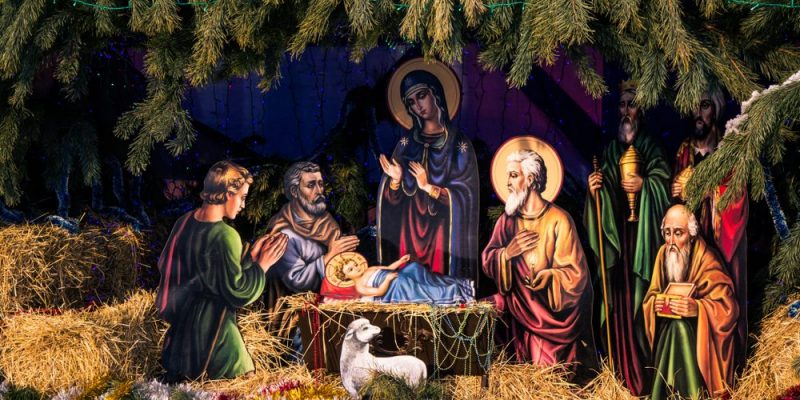
Christmas, as we celebrate today, is a fascinating blend of history, spirituality, collective memory, and human aspirations. Although it is a religious holiday for many, for others it has become a social occasion in which families and friends gather to share meals, songs, stories, and gifts. However, behind this seemingly simple celebration lies a complex historical framework that reveals how, since ancient times, human communities have sought to affirm light amid darkness, hope in uncertainty, and life among social tensions.
The decision to celebrate the birth of Jesus of Nazareth on December 25 was neither an accident nor a revelation from heaven. It was a theological, pastoral, and political choice by Christian leaders in the fourth century to affirm that the central figure of Christianity was not a myth but a historical, real human being of profound significance in his time. By linking his birth to the popular festivities of the Roman Empire, these leaders succeeded in embedding this new faith in the heart of their society’s culture.
Understanding this background does not diminish the spiritual value of Christmas; rather, it enriches it. It reminds us that the Christian faith was born in dialogue with its context, knew how to reinterpret existing symbols, and, from its inception, sought to illuminate human life with a message of freedom, justice, and dignity.
The Festivals of the Roman Empire and the Choice of December 25
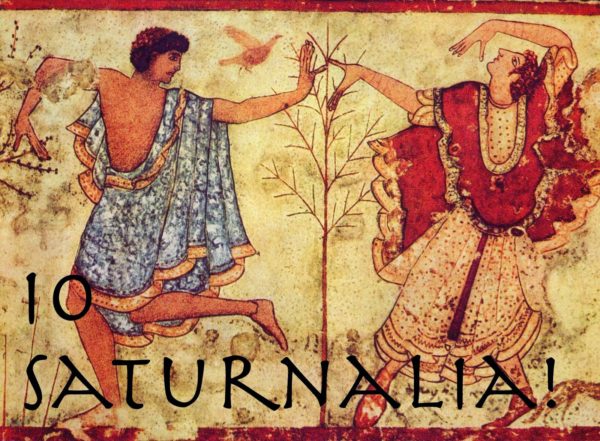
In the Roman world, December was a month of celebrations. The best-known was Saturnalia, a festival that began on December 17 and lasted a week. During those days, society experienced a symbolic reversal: slaves could speak freely, certain social norms were suspended, abundant meals were shared, and gifts were exchanged. Livestock farmers sacrificed animals in preparation for winter to ensure an abundance of fresh meat. It was a festival of conviviality and shared joy (Beard, North & Price, 1998).
Another vital celebration was the festival dedicated to Mithras, a god of Persian origin whose worship had spread among soldiers and merchants. This festival was associated with the cult of Sol Invictus, the “Unconquered Sun,” whose principal festival was celebrated on December 25. That day marked the victory of light over darkness, coinciding with the winter solstice, when the night is longest and the day shortest. People lit torches and lamps on December 24 to “help” the sun in its fight against darkness, and at dawn on the 25th, they celebrated the return of light (Hijmans, 2003).
In this context, Christian leaders saw an opportunity. If Jesus was “the light of the world,” why not celebrate his birth on the day when the sun was symbolically reborn? Thus, the new faith was integrated into an already familiar cultural language, reinterpreting symbols without destroying them. This pastoral strategy facilitated the spread of Christianity and the reception of its message in an environment saturated with luminous symbols.
The Edict of Milan and the Consolidation of Christianity
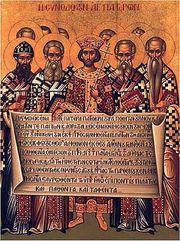
The year 313 AD marked a turning point. With the Edict of Milan, promulgated by the emperors Constantine and Licinius, Christianity gained legal recognition and freedom of worship (González, 1994). What had once been a marginal, persecuted, and suspect faith began to occupy spaces of social and political influence.
This new status enabled the Christian community to organize its writings, define its beliefs, and establish more formal structures. In 367 AD, Athanasius of Alexandria announced the first complete list of the twenty-seven books that now constitute the New Testament. His pastoral and theological authority helped ensure the widespread acceptance of this list.
Shortly thereafter, Jerome undertook the monumental task of translating the Bible into Latin, producing the Vulgate (382–405 AD). To do this, he took the Hebrew Bible, reordered the books, and renamed it the Old Testament, thereby creating a narrative of continuity between Judaism and Christianity.
Placing the Gospel of Matthew at the beginning of the New Testament reinforced this connection, as Matthew presents John the Baptist as the Elijah promised in Malachi. “It is true that Elijah comes first and that he will set everything right. Elijah had already come, but they failed to recognize him and treated him as they wished. Then the disciples realized that Jesus was talking to them about John the Baptist” (Matthew 17:12-13).
These decisions were not merely editorial; they were theological and political. By reorganizing the texts, Christian leaders constructed a coherent narrative that legitimized their faith before an intercultural empire and an established Jewish tradition. From there, this little-known religion had the opportunity to become more prominent in society’s various activities. Of course, this new religious proposal, for political, economic, and cultural reasons, adapted to its context and, in the process, incorporated beliefs and ritual practices it had not previously considered.
A Religion Different from Biblical Judaism
Although Christianity was born within Judaism, it soon became a distinct religion. Its teachings departed from central elements of Judaism, as this new religion had no temple, animal sacrifices, hereditary priests, mandatory tithes, ethnic boundaries, or rigid social structures. It was an itinerant, communal, open, and deeply ethical faith.
Paradoxically, many of its fundamental beliefs do not derive from the Hebrew Bible but from Jewish apocalyptic literature (165–50 BC), written by dissident groups seeking hope amid oppression. Among these texts are the Book of Enoch, the Book of Jubilees, the Ascension of Moses, the Book of Daniel, and other writings that profoundly influenced Jesus and the early Christians (Blanco, 2013; Collins, 1998). From these writings came ideas such as the resurrection of the dead, cosmic messianism, the existence of fallen angels, the struggle between good and evil, the end of the world, the final judgment, and the hope for “new heavens and a new earth.” Jesus used these apocalyptic images to announce a “kingdom of God” that was not an earthly empire, but a way of life marked by justice, compassion, and freedom.
This new religion was presented as new wine. “No one sews a patch of unshrunk cloth on an old garment, for the patch will pull away from the garment, making the tear worse. Neither do people pour new wine into old wineskins. If they do, the skins will burst; the wine will run out, and the wineskins will be ruined. No, they pour new wine into new wineskins, and both are preserved” (Matthew 9:16-17, NIV).
Indeed, these beliefs represented something new and fresh for the majority of the audience. When reviewing this proposal on how to live and coexist as taught by Jesus of Nazareth, it is evident that it offers a highly liberating account and applies to various historical contexts, given that contemporary social reality is very similar to that of his time.
In the face of the temptation to misuse power, this Christian way of life serves as a reminder for religious leaders to avoid believing they are the sole and plenipotentiary owners of the truth. Furthermore, they should not try to exercise control over fundamental aspects of a person’s life, such as eating, dressing, choosing a partner, or how to think, feel, and act. An oppressive religious leadership that hides behind a morbid religious zeal, it closes the doors to science while opening the gates to magic and superstition.
This authoritarian leadership uses religious extortion, including fear, threats of loss of salvation, and deceptive promises of well-being, to maintain control over its members or parishioners. The use of religion as an instrument of control has also spread to unscrupulous and populist politicians, making it challenging to fulfill the gospel of human freedom.
The rise of repressive religious leaders has probably contributed to widespread religious apathy and political indifference. Today, it seems that the night is very long and the darkness lingers longer than necessary. So let us turn on the lights of freedom, peace, justice, and goodness so that the Sun may appear in all its splendor. Once again, Christmas is necessary.
Jesus of Nazareth: A Mestizo Like David
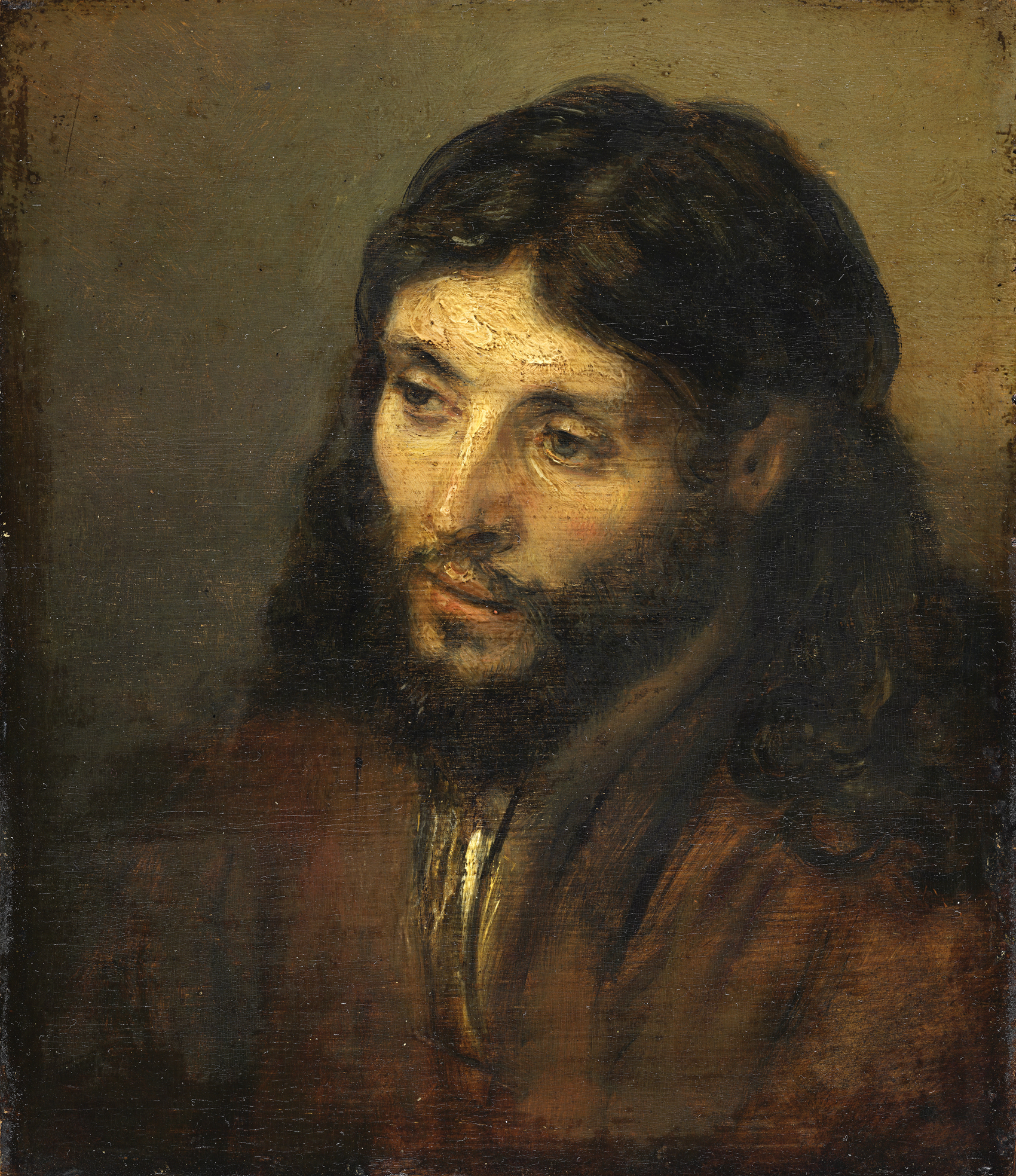
Notably, the angel who appeared to Joseph freed him from the dilemma of having to name the baby who would be born some forty weeks later. There was no need to enter into conflict with the grandmother or the rest of the family. The name that the angel of the Lord assigned him was quite common: Joshua, which in its Greek form is Jesus. The name Joshua means precisely “Yah saves.” Now, what does Jesus of Nazareth save us from?
The author of the Gospel of Matthew places this event within the genealogical context of Jesus of Nazareth. Although the reasons for the writer’s opening are unclear, he clearly sought to affirm that Jesus was a real, historical figure, a descendant of the lineage of the founder of the Hebrew faith, Abraham, and of the great King David.
Adopting a theological and mnemonic perspective rather than a historical one, the author divides the genealogy into three periods spanning approximately two thousand years. To counter the accusation that Jesus of Nazareth was a mestizo, the author draws on David’s female ancestors who were foreigners, thereby suggesting that the great king also had mixed blood.
Thus, this writer, following a pattern uncommon in that tradition, highlights women in each of the three periods: Tamar (Genesis 38), Rahab (Joshua 2), Ruth (Ruth 3), and Bathsheba (2 Samuel 12). A simple way to say it is that if it is true that Jesus is of mixed race, as was King David, then the message is obvious. Jesus is an authentic Israelite of good descent, but also a son of immigrants, of marginalized people, and of a Galilean. It is precisely this son, with his clear cultural and ethnic mixed heritage, who represents the hope for reconciliation and healthy coexistence (Newsom et al., 2012). Thus, it was proposed that salvation and the creation of a better humanity are also possible thanks to people of mixed heritage.
This literary gesture affirms the dignity of marginalized groups, immigrants, and those who live between cultural boundaries. Jesus, as the son of this mixture, embodies the possibility of reconciliation and a broader, more diverse, and more compassionate humanity.

Jesus of Nazareth as Savior
This Christian religion holds that Jesus of Nazareth saves us from sin, heals the diseases of the soul, and protects us from irrational beliefs that hinder flourishing. He saves us from social structures that oppress and keep us in intellectual slavery. He saves us from hopelessness and existential apathy. Furthermore, he saves us from cosmic sin and reconciles us with the Creator, the universe, and the rest of creation. He also saves us from the emotional and religious prisons that keep us enslaved and dominated.
In addition, he saves us from the forces of evil, usually reflected in political and economic power structures (Romans 8:37-38). He saves us from obtuse religious systems that hinder the integral development of human potential (Romans 6:11-23). He saves us from the paralyzing fears of the past, present, and future (1 Corinthians 15). Thus, Jesus of Nazareth saved us, continues to save us, and will save us.
This salvation (soteria) is not an ideology but a hopeful, liberating, and transformative experience. This liberation (eleutheria) is integral to our intellect, emotions, disposition, behavior, and relationships (Galatians 5; 2 Corinthians 3:17). Liberation means that God once again gives us the voice and freedom of expression that the powerful denied us. Furthermore, this salvation helps us recognize our power and reconnect with ourselves and others. The power that God awakens in us enables us to live a new humanity in which justice, equality, and freedom reign (1 Corinthians 4; 2 Corinthians 5).
This redemption brings us a kind of peace that does not imply the absence of conflict and tension but rather internal harmony resulting from the continuous presence of the Spirit of God (Romans 5; Hebrews 12). The salvation that Jesus of Nazareth offers us also frees us from guilt and the power of sin, because, in this new humanity, we no longer need to quarrel with one another but rather accept one another with compassion and be willing to dialogue (John 20:23).
This salvation involves setting aside unnecessary violence (verbal and physical), which fuels dissent and war (Colossians 3). Forgiveness does not mean ignoring or erasing the harm the other person caused, but rather an act of love by the wounded person, who, in forgiving, renounces their right to revenge. This is the good news of salvation.

Christmas as a Symbol of Resistance and Hope
Since its origins, Christmas has been much more than a date on the calendar or an inherited tradition. It is an act of spiritual resistance, a reminder that even in the darkest moments of human history, light finds a way to break through. In the fourth century, as the Roman Empire faced political crises, religious tensions, and deep social inequalities, the celebration of Jesus’ birth became a symbol of renewal. It affirmed that life could be reborn amid violence and that human dignity could rise even when authorities sought to stifle it.
Today, we are not so far from that reality. We live in times marked by religious manipulation disguised as piety, political rhetoric that exploits collective fears, economic inequalities that fracture entire communities, and social apathy that numbs moral conscience. It seems that night has stretched on longer than necessary, as if darkness had claimed a permanent right over our societies.
However, Christmas reminds us that darkness does not have the final word. Light always returns. Hope is always reborn. Humanity can continually reinvent itself. The Christmas message is neither naive nor sentimental; it is deeply subversive. It affirms that life can spring forth in a stable, that dignity can be born on the margins, and that salvation can arise from the small, the fragile, and the unexpected.
Turning on lights at Christmas is not, then, merely a decorative gesture or a simple seasonal adornment. It is a symbolic act of resistance. It declares that freedom is possible even when oppression seems inevitable. It affirms that justice is necessary even when injustice is normalized. It proclaims that kindness is urgent even when indifference becomes the norm. Each light turned on is a silent protest against the darkness that seeks to take hold in our lives.
Christmas invites us to remember that light not only illuminates but also denounces. It exposes shadows, reveals oppressive structures, and makes those who benefit from darkness uncomfortable. That is why celebrating Christmas authentically is a profound political act, in the best sense of the word: a commitment to the transformation of the world, with human dignity, with justice that liberates, and with compassion that restores.
At a time when many feel that the night is endless, Christmas calls us to light up not only our homes, but also our consciences, our communities, and our daily practices. It reminds us that hope is not a passive feeling, but an active force that drives us to build, to heal, to reconcile, and to imagine a different future. Christmas, in its deepest essence, is the proclamation that light conquers, that life breaks through, that humanity can rise again and again. It is an invitation to become bearers of that light, artisans of hope, sowers of goodness in a world that urgently needs it.

Conclusion
Let us celebrate the arrival of Jesus of Nazareth into this world, but above all, let us celebrate his arrival in your world and mine. May his presence continue to awaken in us the capacity to imagine and build a different humanity. It is my prayer and sincere wish for this new year that we join our forces, voices, and hopes to bring forth a new humanity in which faith inspires, hope sustains, and love transforms. A humanity that bears living witness to the integral liberation that Jesus of Nazareth continues to bring about in our lives. A humanity that embodies here and now the reality of the “reign of heaven.”
The Gospel according to Matthew uses the expression “kingdom of heaven” (basileia ton ouranon) some thirty-two times, emphasizing that this kingdom is not a geographical territory or a political project, but a way of life in which power is shared, dignity is honored, and justice is practiced. This kingdom becomes visible when we embrace a lifestyle marked by mercy, compassion, and humility; when we renounce the logic of revenge and choose the logic of forgiveness.
The parable of the unforgiving servant (Matthew 18:23-34) reminds us that the kingdom of heaven is sustained by the capacity to forgive, to recognize others’ humanity, and to act with the same compassion God shows us. Forgiveness is not weakness; it could be strength that breaks chains, heals wounds, and opens paths to reconciliation.
Living up to the “reign of heaven” is not an unattainable utopia. It is possible when we allow ourselves to be moved by the Spirit of God, who awakens in us the power to do good and to be ambassadors of divine love. That power is woven into our cells and genes because we were created in the image and likeness of God. As free, interconnected, and interdependent beings, we achieve existential fulfillment by learning to live in community, grow through our differences, and recognize that diversity is a gift rather than a threat.
In this new year, let us use all our energies—in union with the strengths of our Creator—to build communities where each person can be authentic, express their ideas, uniqueness, and emotions without fear of condemnation or exclusion. Communities that promote inner freedom, human creativity, and the flourishing of each member. Communities with a deep ethical commitment and serious ecological responsibility, recognizing that our bonds with others, with nature, and with the sociocultural context entail mutuality, solidarity, and respect for diversity.
May this new year find us lighting the lights of freedom, justice, compassion, and kindness; may we be artisans of a new humanity in which the “kingdom of heaven” is not a distant ideal but a reality built day by day in our relationships, decisions, and way of loving. A humanity that expresses itself in communities that promote inner freedom and the creative capacity of each human being, with a deep ethical commitment and serious ecological responsibility. Communities in which it is recognized that our bonds with neighbors, with nature, and with the sociocultural context entail mutuality, solidarity, and respect for diversity.

References
Atanasio de Alejandría. (367). Carta Festal 39.
Beard, M., North, J., & Price, S. (1998). Religions of Rome: Volume 1, A History. Cambridge University Press.
Blanco, C. (2013). El pensamiento apocalíptico judío. Ensayo filosófico-teológico. Editorial Trotta.
Collins, J. J. (1998). The Apocalyptic Imagination: An Introduction to Jewish Apocalyptic Literature. Eerdmans.
González, J. (1994). Historia del cristianismo. Tomo 1. Editorial Unilit.
Hijmans, S. (2003). Sol Invictus, the Winter Solstice, and the Origins of Christmas. Journal of Early Christian Studies.
Newsom, C. A., Ringe, S. H., & Lapsley, J. E. (Eds.). (2012). Women’s Bible Commentary: Third Edition, Revised and Updated. Westminster John Knox Press.