
RECURSOS · 2 julio, 2026
Discerning and Embodying God’s Presence in Human Suffering

I.Discerning and Embodying God’s Presence in Human Suffering: A Hermeneutic of Love and Justice.
Esteban Montilla, Ph.D.
Introduction
When the Earth shakes with enough force to level entire cities, the very certainties on which humanity relies to structure our lives also tremble. An earthquake destroys roads, hospitals, schools, and homes. It profoundly changes not only how people view the world, but also how they see themselves in the course of history, and how they view others, and even their relationship with God. In such a devastating tragedy—the sudden deaths of family members, friends, and neighbors; the immediate severing of daily ties; the forced displacement from a place of connection; and the destruction of community projects—people have been led to contemplate matters that have neither a scientific explanation nor a doctrinal formulation.
Geology can describe the movements of tectonic plates—the physical triggers that cause an earthquake. Engineers can study the causes of building collapses. Medicine treats general injuries, and psychology helps us understand the human experience of suffering, grief, and the restructuring of life following devastating events in human history. However, when a community faces the reality of thousands of people who have died, been injured, displaced, or gone missing, other kinds of questions emerge—questions that pertain to the realms of meaning, hope, justice, and faith.
This truth was once again brought to light by the earthquakes of June 24, 2026, in Venezuela, which affected thousands of families or caused them to go missing. While rescue teams searched for survivors amid the rubble and people tried to understand what had really happened, a multitude of religious interpretations began to circulate, attempting to explain the “spiritual” meaning of the disaster. Divine punishment of the nation for its sins, some said. Others claimed that all the deaths served a divine purpose that would eventually be understood. Still others promised that God had chosen to take those who died out of necessity—whether because the new angels needed in heaven had been chosen, or because the right time had come for a particular person to depart.
There were voices that—just as they had been quick to discredit the religious beliefs of other traditions—perceived the earthquake as God’s punishment for practicing and embracing non-orthodox Christian spiritual expressions, such as Spiritism and Santería, since these are syncretic religions that combine aspects of African, Indigenous, and Christian beliefs.
Such statements not only attribute to God a specific intention that is impossible to verify, but also turn collective suffering into a tool for stigmatizing religious communities and deepening social divisions—precisely when the tragedy calls for solidarity, compassion, and shared responsibility. Although many of these interpretations stem from a sincere desire to offer comfort or defend certain religious convictions, they often end up increasing the confusion, guilt, and suffering of those trying to make sense of what has happened in a life that can no longer be narrated in the same way.
This situation is not a new phenomenon in the history of religions. Since ancient times, human beings have sought to interpret great tragedies through narratives that help them preserve a sense of order and coherence. Harold Kushner (1981) showed that many people of faith do not abandon their faith because of suffering, but because certain religious explanations make God seem morally indifferent, cruel, or arbitrary. Nicholas Wolterstorff (1987), writing after the death of his son, recalled that grief is not resolved through abstract arguments, but through a human honesty capable of mourning without renouncing faith.
Robert Neimeyer (2001) has shown that grief involves processes of reconstructing meaning because events of death and rupture not only alter the external circumstances of life but also the narratives through which a person understands who they are, where they are, and how they can continue to live with dignity. From the perspective of practical theology, this reconstruction of meaning must be expanded to include how a person reorganizes their lived relationship with God.
Biblical literature reflects this same human effort to understand suffering and, at the same time, offers a profound critique of those interpretations that reduce pain to a direct consequence of personal sin or to a mechanism through which God rewards, punishes, or corrects human beings. Gustavo Gutiérrez (1986), in his reading of the Book of Job, insisted that speaking of God in the context of the suffering of the innocent requires a spiritual and ethical transformation of religious language. Walter Brueggemann (1984) showed that biblical lament is not a weakness of faith but rather a legitimate form of relationship with God when life is disrupted by injustice, death, or suffering.
The Book of Job perhaps represents the Scriptures’ most significant confrontation with this kind of closed-minded religious thinking. By the end of the story, the central issue is no longer discovering the cause of Job’s suffering, but recognizing the difference between those who spoke about God from the safety of their doctrinal systems and the one who spoke to God from the authenticity of his suffering. “I am very angry with both of you, because, unlike my servant Job, what you have said about me is not true” (Job 42:7, NIV).
Christian tradition finds an equally significant guide in the life and ministry of Jesus of Nazareth. In the face of human suffering, he rarely begins by offering explanations for the causes of pain. In numerous Gospel accounts, his first response is to draw near to those who are suffering, listen to their voices, acknowledge their dignity, and act in ways that restore life, hope, and relationships.
Jürgen Moltmann (1972) argued that the Christian faith cannot speak responsibly about God if it avoids the cross, because the God revealed in Christ does not remain distant from human suffering. Dorothee Sölle (1973) criticized religious practices that turn suffering into a passive virtue and reminded us that faith must resist any interpretation that justifies avoidable pain or silences those who suffer. Henri Nouwen (1972) understood ministry as a wounded and compassionate human presence, capable of serving not from the superiority of the religious expert, but from a shared humanity. “Jesus wept” (John 11:35, NIV). The text does not present this weeping as a theological shortcoming or a lack of hope. It presents Christ as fully participating in the human condition before uttering any words about life.
This article argues that the primary contribution of practical or pastoral theology in the face of collective tragedies is not to justify God or to offer definitive interpretations of the origin of suffering. Its responsibility is to create human, relational, spiritual, and communal conditions that enable people to discern and embody God’s presence as they integrate the devastating events that have transformed their lives into their own stories. From this perspective, the dialogue among practical theology, pastoral psychology, and contemporary studies on grief allows us to shift our focus from explaining suffering to discerning and embodying the divine presence amid it.
This proposal is developed from a Hermeneutics of Love and Justice, understood as an interpretive framework that examines the human, relational, ethical, and spiritual consequences of theological interpretations. From this perspective, fidelity to Scripture cannot be assessed solely by the doctrinal consistency of an interpretation but also by its capacity to promote human dignity, justice, hope, and the love that God revealed in Jesus of Nazareth and manifests toward humanity. Throughout these pages, it will be argued that the vocation of practical theology consists precisely in discerning God’s presence in human suffering and in embodying it through relationships and practices inspired by love and justice.
I.- When Words, Too, Cause Suffering.
Every great tragedy awakens a profound need to understand what has happened. The uncertainty is psychologically, existentially, and spiritually difficult to bear. When a community witnesses the death of thousands of people, the destruction of cities, or the collapse of whatever provided stability, the question of meaning arises almost immediately. This is not merely a matter of intellectual curiosity.
It is a profoundly human quest through which people attempt to reorganize their understanding of the world and find a horizon that allows them to continue living. Precisely for this reason, the first discourses that emerge after a catastrophe exert an enormous influence on how people interpret what has happened and on the image of God that begins to take shape amid suffering.
Religious traditions have not remained on the sidelines of this process. Throughout history, numerous spiritual leaders have sought to answer why natural disasters, epidemics, wars, or mass deaths occur. Some interpretations have helped to strengthen hope and mobilize solidarity. Others, however, have ended up attributing to God decisions that portray the Creator as directly responsible for human destruction.
Harold Kushner (1981) observed that many people do not abandon their faith because they have suffered too much, but because the religious explanations they receive make it impossible for them to continue believing in a good and compassionate God. The problem, therefore, lies not only in suffering itself but also in the way it is interpreted within religious discourse.
It is important to recognize that any assertion regarding God’s specific intentions concerning a historical event goes beyond the limits of human knowledge. In this sense, theology does not directly study God as if God could become an object accessible to human observation or verification.
As David Tracy (1981) points out, theological reflection is an essentially interpretive task, carried out in ongoing dialogue between Scripture, tradition, experience, and historical contexts. From this perspective, theology studies the multiple dialogues, testimonies, narratives, interpretations, and confessions of faith through which human beings, throughout history, have sought to understand the Creator, discern his presence, and interpret his action in the world.
Edward Farley (1983) reminds us that theology does not consist simply in accumulating doctrinal knowledge, but rather in a form of practical wisdom that guides the life of the believing community. For this reason, theological reflection is always mediated by human experience, Scripture, religious traditions, and the historical and cultural contexts from which believing communities speak of God.
For this reason, theological reflection is always shaped by human experience, Scripture, religious traditions, and the historical and cultural contexts from which communities of believers speak of God. Theology can reflect on the character of God as revealed in Scripture, on the history of salvation, and on the many ways in which Christian tradition has understood divine action.
However, it is quite another matter to assert with certainty that an earthquake, a flood, or a specific disease constitutes a deliberate act through which God decided to punish, correct, or reward a particular population. Such an assertion does not arise from verifiable observation or from a revelation directly accessible to the rest of the community of believers. It is a human interpretation that is often presented as if it had divine authority.
Stanley Hauerwas (1981) has emphasized that the Church’s task is not to provide an exhaustive explanation of suffering, but to form communities capable of living faithfully with life amid it. Similarly, John Swinton (2007) warns that many questions about suffering stem from mistaken assumptions, since they presume that the purpose of faith is to offer complete answers to all the events of existence. The Christian tradition has never held such a claim. On the contrary, it recognizes that there are dimensions of God’s mystery that transcend human interpretive capacity and demand intellectual and spiritual humility.
The difficulty arises when that humility disappears and is replaced by absolute certainty. At that point, religious discourse ceases to be a shared search for understanding and becomes a unilateral declaration about supposed divine intentions. Emmanuel Lartey (2003) has shown that all pastoral practice unfolds within power relations and that the language used by those who exercise a ministry is never neutral.
The words of a religious leader possess a symbolic authority that can either strengthen hope or exacerbate the suffering of those who hear them. Carrie Doehring (2015) adds that religious narratives can facilitate the integration of suffering by validating human experience. Still, they can also deepen distress when they invalidate emotions, silence questions, or attribute pain to moral or spiritual failings on the part of the sufferer.
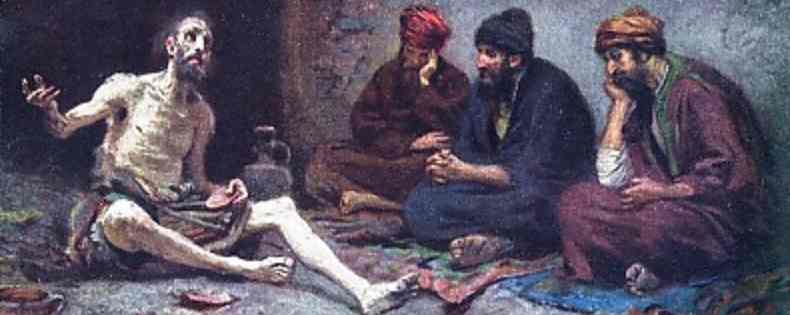
The wisdom literature of the Old Testament offers one of the most profound critiques of this kind of religious certainty. Job’s friends represent a theology that considers it essential to find a coherent explanation for suffering. From their perspective, God governs the universe through a principle of moral retribution, according to which obedience brings well-being and sin brings suffering. If Job experiences a tragedy of such magnitude, there must necessarily be a fault that explains it. The doctrinal system remains intact because the entire burden of explanation falls on the one who suffers.
Gustavo Gutiérrez (1986) observes that the true conflict in the Book of Job does not lie in discovering the origin of suffering, but in unmasking an understanding of God that is incapable of recognizing the reality of the innocent person who suffers. Walter Brueggemann (1984) reaches a similar conclusion, noting that biblical literature deliberately breaks with any theology that seeks to reduce the complexity of human existence to simple religious formulas. Job’s protest does not constitute a threat to faith. The real threat arises when the doctrinal system takes precedence over the specific person whose life has been profoundly transformed by suffering.
This observation has profound implications for contemporary pastoral practice. In the wake of a collective tragedy, the desire to offer quick answers often stems more from the speaker’s anxiety than from the needs of those who are suffering. Silence, uncertainty, and mystery generate discomfort. Hastily explaining suffering may temporarily alleviate the religious leader’s discomfort, but it does not necessarily contribute to the community’s spiritual well-being. Donald Capps (1990) noted that pastoral work requires a deep capacity to tolerate ambiguity without rushing to interpretations that prematurely close off the human experience.
The story of Job reaches its climax when God addresses Eliphaz. “I am very angry with both of you, because, unlike my servant Job, what you have said about me is not true” (Job 42:7, NIV). Significantly, the divine rebuke does not fall on the one who expressed his confusion, his pain, his protest, and his questions, but on those who claimed to speak with absolute certainty about God. The difference between Job and his friends does not lie in who possessed greater doctrinal knowledge, but in the honesty with which each spoke from his own human condition. Job spoke from a place of suffering. His friends spoke out of a need to defend a system of explanations.
This observation serves as a constant warning for pastoral theology. Faithfulness to the God revealed in Jesus Christ is not measured by how quickly we answer questions about suffering, but by the ethical responsibility with which we use language when other people’s lives have been profoundly transformed by events that no explanation can fully encompass. Before attempting to interpret God’s purposes, the Christian community is called to recognize the limits of its own knowledge and to remember that no doctrinal formulation has the right to diminish the dignity, humanity, or experience of those who are enduring suffering.
II.- When the Meaning of Life Is Also Transformed.
If religious interpretations can either alleviate or deepen human suffering, then the pastoral question is no longer limited to assessing the doctrinal validity of such discourses. It also requires understanding how people attempt to reorganize the meaning of their existence when profoundly devastating events transform their history. This shift invites us to move from a critique of religious language to the human experience of suffering, for it is there that practical theology finds one of its most fruitful fields of reflection and service. Before asking how to speak of God in the midst of a tragedy, one must understand what happens to a human being when their life story is profoundly transformed.
Every experience of profound suffering alters the way a person understands their existence. After a collective tragedy, life can no longer be narrated in the same way. The death of family members, friends, and neighbors; the disappearance of entire communities; the destruction of the spaces where daily life took place; and the interruption of personal and collective projects are not merely external events. They become historical events that come to form part of the identity of those who have lived through them. Personal history continues, but it can no longer be understood or narrated apart from what has happened. What took place becomes part of people’s biographies and continues to influence the way they understand the past, live in the present, and imagine the future.
From this perspective, suffering is not simply an intense emotional experience. It is also a hermeneutic experience. Human beings need to interpret what they experience because their understanding of themselves depends largely on the narratives through which they organize their history. When an event profoundly alters that narrative, the way of understanding the past, living in the present, and imagining the future is also transformed. The quest for meaning does not arise solely from the desire to obtain an intellectual explanation. It arises because human beings need to reorganize the continuity of their own existence.
Robert Neimeyer (2001) has developed one of the most influential frameworks for understanding this process by asserting that experiences of death and rupture challenge the systems of meaning through which people interpret their reality. Grief is not simply an emotional response to the death of a loved one. It also involves an ongoing process of reorganizing one’s identity, relationships, and the narratives that enable one to continue living with meaning. From this perspective, meaning is not discovered as a previously hidden truth. Still, it is continually constructed and reconstructed as the person integrates the events of their life story into a broader understanding of their existence.
This understanding is particularly valuable for practical theology because it avoids reducing suffering to a problem that must be solved or eliminated. The death of a daughter, a husband, a mother, or a friend does not disappear with the passage of time. Nor does it cease to be part of the story of the person who continues to live. What can be transformed is the way in which that story is integrated into personal and communal identity. Grief is neither an illness to be cured nor an obstacle to be overcome. It is a profoundly human response to events that forever alter people’s life stories.
Kenneth Doka (2002) has pointed out that many expressions of grief remain invisible because communities do not always recognize the legitimacy of all that people experience when they experience death and relational ruptures. Pauline Boss (1999) also demonstrated that there are situations in which prolonged uncertainty makes it difficult to construct a stable narrative about what has happened, as occurs when a person remains missing or when the magnitude of a tragedy prevents the full identification of those who have died. In circumstances such as these, the pastoral need is not to rush emotional processes or to offer conclusive answers, but rather to foster spaces where human experience can be acknowledged, expressed, and integrated with respect.
Biblical literature offers an extraordinarily rich testimony to this reality. A careful reading of the Psalms reveals that the people of Israel never understood lament as an expression of unbelief. Quite the contrary: lament is one of the deepest forms of faith because it keeps the relationship with God open precisely when reality seems to contradict all the promises. Walter Brueggemann (1984) argues that the laments represent a resistance to any spirituality that seeks to hide suffering under artificial religious optimism. The prayer of lament does not attempt to deny pain or justify it. It presents it before God in all its intensity.
The Book of Job develops this same perspective from a different angle. Job does not merely question what has happened; he also discovers that suffering has radically transformed his understanding of himself and of God. At the end of the book, he does not receive an explanation for his suffering. What he experiences is a new way of standing before God. “I had heard of you by hearsay, but now I have seen you with my own eyes” (Job 42:5, NIV). Significantly, this transformation does not occur upon receiving an intellectual answer, but rather after an experience that profoundly alters his understanding of God and himself.
Gustavo Gutiérrez (1986) interprets this passage by asserting that the true change experienced by Job does not consist in finally understanding the origin of his suffering, but in discovering a relationship with God that transcends his friends’ retributive explanations. The encounter with God does not eliminate the events he lived through nor erase history. What transforms him is his understanding of history from within a deeper relationship with the God of life.
This observation allows us to draw an important distinction between the search for explanations and the experience of God’s presence. The former seeks to explain why certain events occurred. The latter asks: How can a person continue to live, believe, and hope when those events have already become an irreversible part of their history? Pastoral theology finds precisely in this second question one of its most fruitful areas of reflection and service.
From this perspective, the pastoral challenge does not consist solely in facilitating processes through which people can reorganize the meaning of their history. It also consists of fostering human, spiritual, and communal conditions that enable them to discover that their relationship with God can take on new depth precisely when many of their former certainties no longer sustain their lives. The Christian experience does not promise a life free from suffering. It holds that no human reality, however devastating it may be, has the final say regarding the possibility of living with hope, dignity, and communion with God.

III. God’s Presence in the Midst of Suffering.
After a collective tragedy, one of the questions that most often arises is not only why the disaster occurred, but also where God was while it was happening. This question does not stem solely from intellectual curiosity. It expresses a deeply existential need. When a person contemplates the death of loved ones, the destruction of their community, or the collapse of what gave their life stability, they may also find that the image of God they have built up over many years proves insufficient to make sense of the new reality. At that moment, the fundamental question ceases to be the explanation of suffering and becomes the possibility of recognizing God’s presence in a profoundly transformed reality.
A significant part of the Christian tradition has sought to answer this question by defending divine omnipotence through explanations of why God allows suffering. Although these reflections have enriched theological thought, they often shift the focus away from specific individuals toward the need to justify God’s actions intellectually. Human suffering thus risks becoming a philosophical problem rather than a historical reality that calls for compassion, responsibility, and solidarity.
Jürgen Moltmann (1972) proposed a decisive shift by asserting that Christian revelation finds its fullest expression in the crucified God. The center of faith is not found in a distant God who contemplates suffering from the safety of his transcendence, but in a God who fully shares in the human condition in Jesus Christ. The cross does not explain the world’s suffering. It reveals that God does not remain indifferent to it. This assertion profoundly alters pastoral practice by shifting the focus from the search for explanations to the contemplation of God’s presence in solidarity amid human pain.
Dorothee Sölle (1973) developed a similar line of thought when she questioned those forms of religiosity that present suffering as a fate willed by God or as a spiritual virtue in and of itself. For Sölle, Christian faith does not consist in passively resigning oneself to pain, but in recognizing that God continues to act wherever people resist injustice, care for one another, and work for the restoration of human dignity. God’s presence does not legitimize suffering. It manifests itself in a commitment to life precisely where life has been threatened.
The Gospels offer numerous accounts that confirm this perspective. Significantly, Jesus of Nazareth responds in very different ways to various forms of human suffering, yet in none of these accounts does he appear interested in offering a general theory about the causes of pain. His ministry is characterized by closeness to those who suffer, by the restoration of the dignity of the excluded, and by the creation of new relationships that make hope possible. Faced with the death of Lazarus, the Gospel does not first offer a doctrinal explanation of the meaning of death. “Jesus wept” (John 11:35, NIV). This brief account constitutes one of the most profound Christological statements in the New Testament. The Son of God fully shares in human suffering before speaking about life and the resurrection.
Henri Nouwen (1972) understood this reality when he affirmed that Christian ministry arises from a shared humanity and not from a supposed spiritual superiority. Pastoral care loses its authenticity when it attempts to place itself above human suffering. On the contrary, it gains depth when it recognizes that those who exercise ministry also know fragility, pain, and the need for grace. Spiritual authority does not come from having all the answers, but from living out God’s presence with integrity in the midst of the very same uncertainties that others face.
John Swinton (2007) has emphasized that one of the fundamental tasks of practical theology is to help Christian communities discern God’s presence in the concrete reality of everyday life, and not merely in doctrinal systems. This observation is particularly important in the wake of a collective tragedy. Many people hope to find God in an extraordinary event that will end suffering immediately. However, the testimonies of those who have endured wars, earthquakes, forced displacement, or devastating illnesses often reveal a different reality. God’s presence begins to be recognized in the gestures of those who stand by the suffering, in the solidarity that mobilizes entire communities, in the ability to hold onto hope when the future seems uncertain, and in the inner strength that allows one to carry on living even when life has changed forever.
This understanding resonates deeply with the tradition of Clinical Pastoral Education (CPE). Anton Boisen (1936) argued that people are living documents whose stories deserve to be read with the same attention as theological texts. From this perspective, God’s presence is not discovered by distancing oneself from human experience but by respectfully entering it. Every story reveals questions, hopes, contradictions, and quests that constantly challenge overly simplistic religious formulations. Theological reflection thus arises from encounters with specific individuals and returns to them, contributing to their spiritual and human well-being.
Nor can God’s presence be reduced to a particular emotional experience. There are people who, in the midst of suffering, experience comfort, peace, or spiritual strength. Others go through long periods of silence, uncertainty, or deep desolation. The absence of certain religious emotions does not necessarily imply the absence of God. The Psalms offer numerous testimonies of believers who continue to turn to God even when they do not perceive his nearness. “How long, O Lord? Will you keep forgetting me forever? How long will you hide your face from me?” (Psalm 13:1, NIV). Biblical faith recognizes that the human experience of the divine presence can take many forms and that even silence is part of the spiritual journey of many people.
Pastoral practice finds decisive guidance here. Its responsibility is not to produce specific religious experiences or to convince people that they must feel a certain way to demonstrate their faith. Its responsibility is to foster human, spiritual, and communal conditions that allow people to recognize that God remains faithful even when circumstances have changed radically. The divine presence does not eliminate the history of suffering. It becomes visible within that very history through relationships characterized by compassion, solidarity, justice, hope, and love.
From this perspective, the central question is no longer: Where was God when the tragedy occurred? The most fruitful pastoral question is to discern how God’s presence continues to manifest itself as a community learns to live with a history that has been transformed forever. There is beginning to emerge an understanding of faith that no longer depends on exhaustive explanations of suffering but on the conviction that no tragedy can separate human beings from God’s love or prevent that love from continuing to make itself present in history.
IV.- Discerning God’s Presence through a Hermeneutic of Love and Justice.
The reflections developed thus far lead to a question distinct from the one that has traditionally occupied much of Christian theodicy. For centuries, the discussion revolved around how to reconcile the existence of a good and omnipotent God with the reality of suffering. That question continues to hold enormous importance for philosophy and systematic theology.
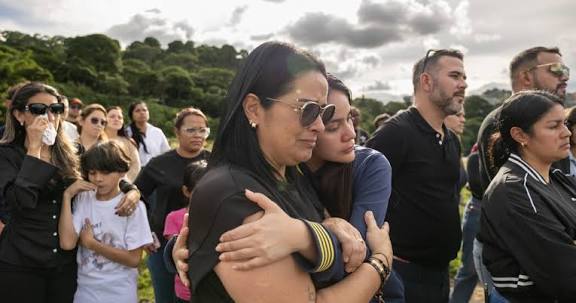
However, when a mother witnesses the death of her children after an earthquake, when a community tries to identify those who died amid the rubble, or when a family returns to the site where their home once stood, the immediate need is rarely to resolve a philosophical problem. The question that emerges from the depths of human experience is another: How can God’s presence be recognized when history has been so radically transformed?
Answering this question requires a different way of interpreting Scripture, human experience, and pastoral action. Montilla (2026) proposes that every theological interpretation must be examined not only for its doctrinal consistency but also for the human, relational, spiritual, and communal consequences it produces. No interpretation can be considered pastorally adequate if it degrades human dignity, unnecessarily increases suffering, fosters guilt, or presents a face of God incompatible with that revealed in Jesus of Nazareth. Theological fidelity does not depend solely on affirming correct doctrines. It also requires discerning whether our interpretations promote life, hope, justice, and love.
This hermeneutical criterion takes on special relevance in the wake of a collective tragedy. Religious explanations are not merely private opinions. They shape how people understand God, interpret their own history, and relate to one another. When a religious leader asserts that an earthquake constitutes divine punishment or that deaths result from a specific decision by God, they are not merely proposing a doctrinal interpretation. They are actively intervening in the process by which people attempt to make sense of their suffering. The ethical responsibility of those who interpret Scripture increases precisely because their words help shape the spiritual lives of deeply vulnerable communities.
From this perspective, the Hermeneutics of Love and Justice shifts the focus of reflection. The first question is no longer whether an explanation is logically possible. The initial question is whether that interpretation reflects the character of God revealed in Jesus of Nazareth. The Gospels repeatedly present a Jesus Christ who dignifies people, restores relationships, denounces injustice, welcomes those rejected by society, and manifests a profound sensitivity to human suffering. Any interpretation that attributes to God actions incompatible with this ethical horizon deserves to be examined with prudence, humility, and theological rigor.
This shift also leads to a different understanding of God’s presence. People often seek that presence exclusively in extraordinary events or intense religious experiences. However, the biblical narrative repeatedly shows that God makes himself present in history through relationships characterized by compassion, hospitality, justice, solidarity, and love. The ministry of Jesus of Nazareth constitutes the fullest expression of this reality. His life was not oriented toward offering exhaustive explanations of suffering, but rather toward making the Kingdom of God visible through concrete actions that restored people’s dignity and strengthened the hope of communities.
This understanding finds practical expression in what Montilla (2026) calls the Noble Relational Mode. Relational nobility is neither a religious intervention technique nor a communication strategy. It represents a way of relating to another person—recognizing their dignity, respecting their freedom, listening deeply to their story, and avoiding the use of religious language as an instrument of control, manipulation, or moral superiority. In contexts of collective suffering, this form of relationship allows people to find a space where their questions, doubts, pain, and hope are received with respect, without the pressure to accept premature answers or imposed interpretations.
The Book of Job offers a particularly meaningful illustration of this reality. At the beginning of the story, Job’s three friends perform what is perhaps one of the noblest acts in the entire narrative. They travel to be with him, weep, tear their robes, sit by his side for seven days and seven nights, and remain silent because they recognize the magnitude of his suffering. During that time, they do not attempt to explain the tragedy or defend a doctrine. Their mere presence expresses solidarity and respect for their friend’s experience.
However, when silence gives way to theological debate, the relationship begins to change. Eliphaz, Bildad, and Zophar gradually abandon integral listening in favor of defending their own convictions about the world, life, God, and human relationships. Later, Elihu joins them—a young man who also feels it necessary to correct Job and justify the way God governs the world. The conversation shifts from the experience of the one who is suffering to the defense of various doctrinal systems.
Each represents a different way of understanding the relationship between God and human suffering. Eliphaz interprets reality from a predominantly retributive perspective, according to which suffering necessarily reveals some form of guilt. Bildad insists on the moral order of the universe and on God’s infallible justice, convinced that suffering confirms the righteousness of that order. Zophar takes this perspective even further by suggesting that Job deserves an even greater punishment than the one he has received. Elihu introduces another interpretation, presenting it as a pedagogical means by which God corrects, instructs, and guides people. Although their arguments differ, all four share the same underlying assumption. They believe they possess sufficient knowledge to explain God’s actions and to interpret with certainty the meaning of Job’s suffering.
The book’s conclusion fundamentally challenges that perspective. After listening carefully to all the speakers, the Lord addresses Eliphaz as the group’s representative. He declares, “I am angry with you and your two friends, because you have not spoken the truth about me, as my servant Job has” (Job 42:7, NIV). The narrative suggests that God’s rebuke is not directed toward those who asked difficult questions or toward the one who honestly expressed his pain. It is directed toward those who spoke about God with a certainty that God Himself rejects.
Their failure was not simply that their explanations proved inadequate. Rather, they abandoned solidarity to defend their theological systems. They ceased listening to the concrete human being before them because preserving their doctrines about God had become more important than responding to the suffering of their friend. In doing so, the narrative shifts the focus from doctrinal correctness to relational faithfulness, suggesting that the first pastoral failure occurs when the defense of theological certainty takes precedence over the dignity of the person who suffers.
From the perspective of the Noble Relational Way, this shift is decisive. Spiritual ministry loses its direction when the need to defend a particular understanding of God takes precedence over the well-being of the person who is suffering. Relational nobility demands a constant willingness to recognize that no doctrinal formulation possesses greater dignity than the human being created in the image of God. Only when this conviction guides our relationships does religious language cease to be an instrument of imposition and open spaces in which people can discern, with freedom and hope, the presence of the God revealed in Jesus of Nazareth.
Discerning God’s presence through a hermeneutic of love and justice entails recognizing that God’s action is not always manifest in extraordinary events or immediate answers to human questions. More often, the community of believers learns to discern that presence where human life is protected, where dignity is restored, and where compassion is transformed into concrete acts of justice and solidarity.
After an earthquake, God’s presence is often discernible in the rescue teams who risk their lives to save others, in the healthcare professionals who work endless shifts caring for the injured, in the churches that open their doors to offer shelter, food, and spiritual care, in neighbors who share the resources they still have, and in the countless expressions of generosity through which a community chooses to rebuild life without abandoning those whose lives have been profoundly transformed.
None of these actions constitutes objective proof of divine intervention, nor do they explain why the tragedy occurred. However, from a Christian perspective, they can be understood as events in which the love, mercy, and justice that Scripture attributes to God remain present in human history.
This understanding also transforms the meaning of pastoral ministry. The vocation of the pastor, the chaplain, the pastoral counselor, and every religious leader does not consist in interpreting God’s supposed hidden designs in the face of every tragedy, but rather in fostering relationships, communities, and practices that allow for a clearer discernment of the presence of God revealed in Jesus Christ. Pastoral authority does not stem from the ability to answer every question or from the certainty with which statements about God are made. It arises from the credibility of a life and a ministry that reflect love, justice, humility, hope, and a deep respect for the dignity of every human being.
From this perspective, the decisive question in the wake of a tragedy is no longer why God allowed suffering. The question centers on discerning how the Christian community can make the love and justice of God, revealed in Jesus of Nazareth, more visible in the way it lives and relates to one another. Practical theology has no authority to explain why an earthquake occurred. It does, however, bear the ethical and spiritual responsibility to foster human, relational, and communal conditions that allow us to discern that God’s presence continues to sustain life even when many questions remain unanswered, and history has been transformed forever.

Conclusion
Major tragedies test not only the adaptability of individuals and communities, but also the quality of theological reflection and pastoral practice. After an earthquake, a flood, a war, or any event that profoundly transforms human history, the same questions that have accompanied humanity since ancient times resurface. Where was God? Why did this tragedy happen? What meaning can such suffering have? These questions remain legitimate and will likely continue to accompany the human experience as long as death, pain, and injustice exist. However, theology’s primary responsibility is not to provide definitive answers to them.
The Christian tradition offers sufficient reasons to affirm that God remains faithful to humanity even in the midst of suffering. What it does not offer is authorization to attribute, with certainty, the specific causes of each historical tragedy to God. The difference between these two assertions is decisive for pastoral practice. The first strengthens hope. The second can turn human interpretations into supposed divine declarations, ultimately increasing the suffering of those seeking meaning amid deeply painful circumstances.
The dialogue with Harold Kushner (1981), Nicholas Wolterstorff (1987), Robert Neimeyer (2001), Jürgen Moltmann (1972), Walter Brueggemann (1984), Gustavo Gutiérrez (1986), Henri Nouwen (1972), John Swinton (2007), and other authors allows us to recognize a significant point of convergence. The decisive question is not how to intellectually justify God in the face of human suffering. It is how to discern in what way God’s presence continues to make itself perceptible in a history profoundly transformed by events that no explanation can fully encompass.
From this perspective, the Hermeneutics of Love and Justice proposes a shift in orientation for contemporary pastoral theology. Rather than beginning by asking what God did, it invites us to discern how the love, justice, mercy, and hope that the Scriptures reveal about God continue to manifest themselves in the lives of individuals and communities. This discernment requires intellectual humility to acknowledge the limits of human knowledge and, at the same time, a profound ethical responsibility regarding the language used when others are experiencing suffering.
Pastoral practice faces one of its most significant challenges here. Ministers, chaplains, pastoral counselors, and religious leaders are called to exercise a ministry that makes the character of Jesus Christ visible through the way they listen, serve, care for others, pray, teach, and build community. Their authority does not depend on their ability to answer every question about God. It depends on the credibility of a life that reflects love, justice, humility, compassion, and hope precisely where human existence has been profoundly transformed by suffering.
The recent tragedies experienced by the Venezuelan people serve as a reminder that the earth can shake in a matter of seconds and forever alter the history of thousands of people. They also remind us that the words spoken in the wake of a tragedy have the power to strengthen or weaken hope, to enhance or diminish human dignity, and to bring people closer to—or further away from—the image of God proclaimed by the Gospel. For this reason, pastoral responsibility does not consist solely in speaking about God. It consists in doing so with the prudence, humility, and compassion demanded by the reality of those who suffer.
Practical theology was never tasked with exhaustively explaining God’s action in history. Its vocation is to help individuals and communities discern—with wisdom, responsibility, and hope—how God’s presence continues to make itself known in the midst of human history. Explaining belongs primarily to the realm of certainty. Discerning belongs to the realm of wisdom. Where certainty acknowledges its limits, wisdom makes room for humility, for mystery, and for a faith that continues to discover the presence of the God revealed in Jesus of Nazareth even when the earth has shaken. Many of the old certainties have been transformed forever.
Discerning God’s presence inevitably leads to the responsibility of embodying it in history. The Christian faith is not limited to recognizing where God’s action can be perceived. It also invites us to decide, freely and responsibly, to live in such a way that our actions reflect the goodness, mercy, justice, and love that Scripture attributes to the Creator. Every time a person chooses to protect another’s dignity, alleviate suffering, share their resources, defend justice, comfort with humility, or serve with generosity, they make God’s character more visible in human history.
Allowing our steps to follow the paths of compassion, our hands to become instruments of care and service, and our words to communicate grace, hope, and truth is one of the most profound ways to embody God’s presence in the midst of pain, suffering, misery, and chaos. Perhaps this is one of the noblest callings of practical-pastoral theology and Christian ministry: not to presume to speak in God’s stead, but to live in such a way that others may discern, through our relationships and actions, something of the love and justice of the God revealed in Jesus of Nazareth.
References
Boisen, A. T. (1936). The exploration of the inner world: A study of mental disorder and religious experience. Harper & Brothers.
Boss, P. (1999). Ambiguous Loss: Learning to Live with Unresolved Grief. Harvard University Press.
Brueggemann, W. (1984). The Message of the Psalms: A Theological Commentary. Augsburg Publishing House.
Capps, D. (1990). Reframing: A New Method in Pastoral Care. Fortress Press.
Doehring, C. (2015). The Practice of Pastoral Care: A Postmodern Approach (Rev. ed.). Westminster John Knox Press.
Farley, E. (1983). Theologia: The fragmentation and unity of theological education. Fortress Press.
Gutiérrez, G. (1986). On Job: God-talk and the Suffering of the Innocent. Orbis Books.
Hauerwas, S. (1981). A Community of Character: Toward a Constructive Christian Social Ethic. University of Notre Dame Press.
Kushner, H. S. (1981). When Bad Things Happen to Good People. Schocken Books.
Lartey, E. Y. (2003). In Living Color: An Intercultural Approach to Pastoral Care and Counseling (2nd ed.). Jessica Kingsley Publishers.
Moltmann, J. (1972). The Crucified God: The Cross of Christ as the Foundation and Critique of Christian Theology (R. A. Wilson & J. Bowden, Trans.). SCM Press.
Montilla, R. E. (2026). Transforming Presence: Practical Theology for Good Living. MCT Publishing.
Neimeyer, R. A. (2001). Meaning Reconstruction and the Experience of Loss. American Psychological Association.
Nouwen, H. J. M. (1972). The Wounded Healer: Ministry in Contemporary Society. Doubleday.
Swinton, J. (2007). Raging with Compassion: Pastoral Responses to the Problem of Evil. William B. Eerdmans Publishing.
Tracy, D. (1981). The Analogical Imagination: Christian Theology and the Culture of Pluralism. Crossroad.
Wolterstorff, N. (1987). Lament for a Son. William B. Eerdmans Publishing.