How to read the Bible without causing harm
Esteban Montilla | 2 enero, 2026

Introduction
The Bible is a collection of deeply human and spiritual texts. It originated in communities struggling to survive, assert their identity, and find meaning amid fragility, injustice, and uncertainty. For this reason, the Bible is neither uniform nor neutral, as it contains diverse voices, internal tensions, particular ideologies, and memories of people seeking to understand their relationships with God, with others, and with themselves. However, this complexity does not diminish its value; on the contrary, it makes it more real, more accessible, and better able to accompany the human experience in all its breadth.
When read from the hermeneutics of love and justice, the Bible can become a profound source of spiritual, psychological, and relational well-being. This reading does not seek to deny the text’s shadows but to illuminate them with an ethic that privileges human dignity, compassion, and equality. By reading in this way, the reader can free themselves from harmful interpretations that have produced excessive guilt, unnecessary fear, extreme shame, or unjust exclusion, and find in the Scriptures a space for recognition, comfort, and hope. The hermeneutics of love and justice allows the Bible to be a place where people discover that their value does not depend on genealogies, roles, rigid norms, or narrative favoritism, but on their shared humanity.
Furthermore, this approach reveals the best that the Bible has to offer, including the language to name pain, the imagination to resist injustice, the wisdom to live more deeply, and the metaphors that accompany processes of healing and integral development. Read with love and justice, the Bible does not oppress; on the contrary, it celebrates freedom. It does not impose burdens; it lightens the heart. It does not confine, but opens paths. Thus, despite its tensions and limitations, the Bible can serve as a source of life, dignity, and personal and communal transformation.
Precisely because the Bible is a complex text, both human and spiritual, and because reading it can produce both well-being and harm, it is essential to develop an approach that honors its richness without reproducing its shadows. If the hermeneutics of love and justice allow us to receive the best that the Bible has to offer, then we need a pedagogy that accompanies this process responsibly. A pedagogy that does not impose meanings, that does not silence experiences, that does not use the text to control or exclude unfairly, but rather opens spaces for recognition, dialogue, and healing. In this sense, qualitative hermeneutical research offers a particularly suitable framework for reading the Bible in a way that does good, because it allows meaning to emerge from the living encounter between the text and the reader, rather than from rigid structures or doctrines imposed from outside.

- Hermeneutical pedagogy that does good.
Qualitative hermeneutic research offers a particularly suitable framework for reading sacred texts because it recognizes that meaning is not fixed in advance but emerges from the encounter among the text, the experience, and the reader or listener. This approach privileges dense description, the interpreter’s reflexivity, and careful attention to the nuances of human experience, allowing the voices, beliefs, aspirations, emotions, and memories activated during reading to be treated as meaningful data rather than obstacles. As van Manen points out, qualitative hermeneutics seeks to understand human experience in depth, attending to the meanings revealed in the interaction between the reader and the phenomenon under study (van Manen, 1990).
This dialogical understanding of the hermeneutic process also coincides with the insights of Anton Boisen (1936) and Justo L. González (1996), who argue that reading the Bible is not a unidirectional act. For his part, Boisen argued that human experience—especially in times of crisis—should be read as a “living text” that challenges, questions, and reveals profound dimensions of being, just as Scripture does. González, for his part, has insisted that the Bible is not only read by us, but also reads us, exposing our motivations, prejudices, and hopes, and calling us to ethical and spiritual transformation. This interpretation implies entering into a relationship in which both the text and the reader reveal themselves to each other, creating a space for encounter that dignifies, liberates, and humanizes.
This perspective fully aligns with the hermeneutics of love and justice, since both are based on the conviction that interpretation is an ethical act: an approach to the text or the person with care, sensitivity, humility, openness, and respect. Thus, biblical reading becomes a relational process in which the goal is not to impose meanings, but to accompany the emergence of meaning in a way that honors the dignity, vulnerability, history, and longings of both the author and the reader, thereby promoting more reliable readings.
Teaching how to read the Bible without causing harm is one of the most urgent and delicate tasks of contemporary spiritual formation. Scripture, which has been a source of comfort, liberation, and hope for many, has also been used to justify violence, unjust exclusion, shame, and traumatic silences. This ambivalence resides not only in the text itself but also in how it is interpreted, taught, and embodied within specific communities. Therefore, a responsible hermeneutical pedagogy must recognize that all biblical reading is a relational act involving people, histories, memories, wounds, and hopes.
The perspective of care as an ethical and spiritual category illuminates the hermeneutical task, for the Bible can be read without causing harm when approached with an ethic of care that protects life, recognizes fragility, and promotes human dignity. It is not simply a matter of transmitting exegetical information, but of accompanying human processes in which interpretation can heal or hurt, liberate or imprison, dignify or humiliate.
When God asks, “Where are you?” (Genesis 3:9, NIV), he is not simply seeking information, but a close relationship. It is a search because he misses the connection with human beings. That question is also the starting point for any pedagogy that seeks to avoid causing harm and, to that end, recognizes where the reader is, what they bring, what they fear, and what they long for. A hermeneutical pedagogy that seeks not to cause harm recognizes the reader’s vulnerability. People do not come to the text as blank slates, but as beings marked by experiences of love and grief, trust and betrayal, belonging and exclusion.
Trauma psychology has shown that narratives can trigger deep memories, especially when they evoke themes of unjust violence, unnecessary guilt, abandonment, or punishment. This means that specific biblical passages, especially those that speak of judgment, submission, sin, or suffering, can reopen old wounds if taught without pastoral sensitivity. Responsible hermeneutical pedagogy recognizes this reality and approaches the text knowing that interpretation does not occur in a vacuum, but in people who remember. Psychiatrist Judith Herman (1992), one of the most respected authorities in the study of post-traumatic stress, emphasizes that recovery from trauma requires safety, memory, and reconnection; similarly, Bible reading should provide a safe space where people can explore the text without fear of being harmed by it.
Nevertheless, avoiding harm does not entail softening the text or reducing it to a superficial message. It means teaching people to read it from a position of dignity, freedom, and responsibility. As Justo L. González (1996) points out, biblical reading always takes place within a specific history and in communities that interpret from their own experience; therefore, all reading is situated and must recognize the voices, memories, and struggles of those who read it. This historical and communal perspective reinforces the need for a hermeneutic that does not impose uniformity but rather opens space for each reader to find their voice and dignity in the text.
The Jewish tradition has insisted that interpretation is an act of encounter, not of imposition. Abraham Joshua Heschel (1955), a Polish-American Jewish theologian and philosopher known for his deep spirituality, emphasis on human dignity, and commitment to social justice, asserts that the Bible should be read “with an open heart,” that is, with an ethical sensitivity that recognizes the presence of the other person—human and divine—in the act of interpretation. This attitude contrasts with authoritarian pedagogies that present the Bible as a set of unquestionable truths that must be accepted without dialogue.
A hermeneutical pedagogy that does not harm invites conversation, questioning, doubt, and exploration. Everett Fox (1995), a renowned scholar of the Hebrew Bible and professor of Jewish studies at Clark University, points out that the Hebrew text is designed to provoke reflection, not to shut it down. Teaching how to read the Bible without causing harm, then, means honoring its dialogical character.
The analytical dimension is an essential part of the hermeneutics of love and justice, because love cannot be naive in the face of structures that cause harm, and justice demands that we unmask the interpretations that reproduce inequality. Aníbal Quijano (2000) warns that power structures can colonize not only territories but also consciences, imposing narratives that strip people of their ability to interpret their own experience. When specific biblical readings are used to legitimize blind obedience or uncritical submission, they reproduce this “coloniality of power” in the spiritual realm, generating moral injuries that fracture dignity and silence conscience.
Applied to the Bible, this means teaching people to read the text in ways that promote justice, equity, and liberation. For this reason, specific biblical passages require pastoral sensitivity. When the text states, “The Lord is close to the brokenhearted” (Psalm 34:18, NIV), it offers a framework for reading from a place of compassion rather than judgment. bell hooks (1994) adds that liberating education is that which allows people to regain their voice and exercise their freedom.
A hermeneutical pedagogy that does not harm must therefore assist readers in recognizing their dignity and their ability to interpret the text from their own experience, without submitting to readings that diminish or silence them. This approach to teaching how to read the text promotes justice and equity. When the prophet declares, “Let justice roll down like waters” (Amos 5:24, NIV), he offers a hermeneutical criterion by which any interpretation that fails to promote justice and goodness departs from the text’s spirit (Armstrong, 2007).
Teaching how to read the Bible without causing harm also involves recognizing that interpretation is a communal act. Reading in isolation can become an exercise in self-justification or self-accusation, whereas reading in community allows multiple voices to correct, expand, and enrich the text’s understanding. Henri Nouwen (1979) emphasizes that community is the place where wounds can become sources of compassion. When community becomes a space for listening, honesty, and accompaniment, Bible reading is transformed into an act of collective healing. This requires a pedagogy that fosters shared vulnerability, empathy, and mutual responsibility.
In this sense, teaching how to read the Bible without causing harm is a profoundly spiritual act. It is not only about protecting the reader, but also about honoring the intention of the text, whether to live it by imitation or by contrast. Hermeneutical pedagogy is, ultimately, a pedagogy of love. Moreover, as Heschel (1955) reminds us, “God is not in the words, but in the relationship that the words awaken.” Teaching how to read the Bible without causing harm is teaching how to read from a place of relationship, dignity, justice, and hope. When Jesus declares, “The truth will set you free” (John 8:32, NIV), he is not referring to a rigid doctrine, but to a relationship that sets you free.

2. Avoiding psychological trauma
Avoiding psychological trauma in biblical teaching is an unavoidable ethical responsibility. The Bible is a powerful text, capable of bringing deep comfort, but also of triggering painful memories when interpreted insensitively. Albert Ellis (1962) showed that rigid, absolutist, and demanding beliefs—the “I must,” “I have to,” and “I cannot fail”—generate anxiety, guilt, and unnecessary emotional suffering. When these beliefs originate in inflexible biblical interpretations, they can become spiritual distortions that damage the conscience and fuel psychological trauma. Teaching people to read the Bible without causing harm involves helping readers distinguish the voice of God from the irrational beliefs that a community or tradition has imposed on the text.
Psychological trauma arises not only from extreme events, but also from interpretations that impose fear, shame, or silence. Trauma is exacerbated when the person cannot name their experience or when they are forced to interpret it from categories that blame or minimize it. In religious contexts, this occurs when biblical texts are used to demand submission, justify suffering, or impose impossible moral burdens.
Psychological trauma can also arise when images of God are presented that evoke only judgment and punishment. Representations of a vigilant, severe, or unpredictable God have hurt many people. However, Scripture also offers images of a God who cares, accompanies, and sustains. “I have loved you with an everlasting love” (Jeremiah 31:3, NIV) is an affirmation that can counteract years of religious fear.
When “The heart is deceitful” (Jeremiah 17:9, NIV) is quoted without context, it can invalidate the emotional experience of an already silenced person. When “I can do all things through Christ” (Philippians 4:13, NIV) is recited as a command rather than a source of comfort, it can engender guilt in those who are exhausted or depressed. A hermeneutical pedagogy that avoids trauma recognizes that texts should not be used as weapons, but as companions. The goal is not to control the reader’s experience but to create a space in which they can encounter the text without feeling judged or threatened.
The Bible itself offers keys to reading that avoid harm. When God asks Elijah, “What are you doing here?” (1 Kings 19:9, NIV), he does not rebuke him for his fear but instead invites him to speak despite his exhaustion. Elijah does not receive a sermon, but rest, food, and silence. This scene is a model of pastoral presence and spiritual assistance for traumatized readers: before interpreting, one must listen; before teaching, one must care.
Abraham Joshua Heschel (1955) insists that the essence of biblical faith is God’s response to human seeking, not God crushing humanity. Teaching people to read the Bible without causing emotional trauma involves highlighting these images of tenderness, justice, and accompaniment, without denying the complexity of the text or reinforcing psychological wounds.
Hermeneutical pedagogy must also recognize that psychological trauma affects the ability to interpret. Traumatized people may read specific texts from a place of hypervigilance, guilt, or fear. This is not a lack of faith, but a normal human response. Therefore, teaching without causing harm requires patience, humility, and sensitivity. It is not a matter of correcting the reader, but of accompanying them in their process. When Jesus says, “Come to me, all you who are weary and burdened” (Matthew 11:28, NIV), he offers a hermeneutic of rest, not of demand. Bible reading should be a space where the reader can breathe, not where they feel pressured to perform spiritually.
Phyllis Trible (1984), an American biblical scholar recognized for her pioneering contribution to hermeneutics that analyzes with sensitivity and rigor the experiences of women and victims in biblical texts, has shown in depth that some biblical passages—what she calls “texts of terror”—can reopen deep wounds when read without sensitivity or context, especially in people who have suffered violence or abuse. Her work reminds us that teaching people to read the Bible without causing harm involves recognizing that specific texts require careful accompaniment, a hermeneutics of grief, and a pedagogy that protects the reader’s vulnerability.
Hermeneutical pedagogy that avoids trauma is not weak, but deeply ethical. It recognizes that reading the Bible is an encounter between human stories and God’s story, and that this encounter must be a space of dignity, care, and hope. Teaching how to read the Bible without causing trauma is, ultimately, teaching how to read from a place of compassion, listening, and a deep conviction that God does not hurt, but heals.

3. Avoiding moral injury
Avoiding moral injury in Bible teaching is a profoundly ethical task because morality is formed not only by ideas but also by experiences that touch the conscience, dignity, and identity. Moral injury occurs when a person is led—or pushed—to act, believe, or feel in ways that contradict their deepest sense of what is good, just, and humane.
Jonathan Shay (1994), an American psychiatrist known for his work with war veterans and his analysis of moral trauma through classical literature, describes moral injury as a wound to the soul, a fracture in the ability to trust oneself, others, or God. In religious contexts, these wounds can arise when biblical texts are used to impose blind obedience, justify unnecessary suffering, or demand sacrifices that destroy personal integrity. When Jesus declares, “The Sabbath was made for man, not man for the Sabbath” (Mark 2:27, NIV), he offers an essential hermeneutical principle: no religious interpretation should be placed above human dignity. Teaching the Bible without causing moral injury involves remembering that biblical morality is always relational, never dehumanizing.
Moral injury can also arise when images of God are presented that generate fear, shame, or self-accusation. Many people have been raised in contexts where they were taught to fear God rather than trust Him, or where they were told that their suffering was proof of a lack of faith. These interpretations can cause deep internal fractures, mainly when isolated texts are used to reinforce guilt.
Moral injury also occurs when individuals are compelled to deny their inner experience to conform to rigid interpretations of the text. As Hans Küng (1991) reminds us, no religious tradition can claim authenticity if it violates human conscience or destroys people’s dignity; all truly spiritual ethics must be oriented toward universal responsibility and respect for the integrity of the other person. This perspective illuminates the seriousness of moral injury: when a biblical interpretation compels someone to betray themselves, it ceases to be faith and becomes spiritual oppression.
Brett Litz and his colleagues (2009) point out that moral injury arises when a person is forced to act against their conscience or to accept narratives that contradict their sense of justice. In religious contexts, this happens when people are required to silence their pain, repress their identity, or accept injustices as “God’s will.” However, the Bible itself offers a different model. The psalms of lament show that authentic faith includes protest, doubt, and complaint. “How long, Lord?” (Psalm 13:1, NIV) is a legitimate prayer, not a lack of faith. Teaching people to read the Bible without causing moral injury entails validating human experience rather than silencing it. Biblical morality does not require denying pain, but bringing it to God with honesty.
Moral injury can also arise when ethical mandates are imposed without recognizing the complexity of human life. Many people have been hurt by interpretations that demand immediate forgiveness, forced reconciliation, or unconditional submission. When “Forgive as the Lord forgave you” (Colossians 3:13, NIV) is quoted without acknowledging the emotional and psychological process of forgiveness, an impossible moral burden can be imposed.
When “It bears all things” (1 Corinthians 13:7, NIV) is repeated to justify remaining in abusive relationships, the spirit of the text is betrayed. A hermeneutical pedagogy that avoids moral injury recognizes that biblical ethics is not a list of rules, but an invitation to live in justice, mercy, and humility. As Micah reminds us, “What the Lord requires of you is to do justice, love mercy, and walk humbly with your God” (Micah 6:8, NIV). This verse offers a hermeneutical criterion that protects against harmful interpretations: biblical morality must always promote justice, compassion, and humility.
Avoiding moral injury also involves recognizing that the human conscience is a sacred space. The Bible does not seek to destroy the conscience, but to form it. Paul affirms, “Whatever you believe, believe before God” (Romans 14:22, NIV), reminding us that morality cannot be imposed from outside, but must arise from an honest dialogue between the person and God.
The commitment to act in a way that does not cause moral injury is an act of justice and kindness. The Bible is a book of faith, written by various authors who had their own culture, desires for identity, and ambitions for progress, which must be allowed to emerge as we permit their intended meanings to come forth from the text. At the same time, the reader must commit to putting their biases and expectations on hold as much as possible. In this way, the text is approached with integrity, and the author’s teachings can be understood and either imitated or lived out.

4. Communities that heal.
Healing communities are those that recognize that Bible reading is not an isolated intellectual exercise but a deeply relational act in which people encounter God, the text, and one another from a place of vulnerability. Healing does not occur in a vacuum; it occurs in a space where the presence of another person attests that life can begin again.
When the apostle Paul exhorts, “Carry each other’s burdens” (Galatians 6:2, NIV), he is not proposing an abstract ideal but rather describing the very structure of a healing community, that is, a place where burdens are not denied or minimized but shared. Community healing requires a hermeneutic that recognizes human complexity. As Karen Armstrong (2011), one of the most influential contemporary voices in ethical and spiritual reflection, has shown, compassion is not a spontaneous feeling but a deliberate practice that communities must cultivate to become spaces of healing.
Community healing also involves an ethic of presence. In a world marked by haste, productivity, and disconnection, the healing community is distinguished by its capacity to be present. To be with those who suffer, to be with those who doubt, to be with those who seek. Jesus himself embodies this ethic when he declares, “I am with you always” (Matthew 28:20, NIV). Presence does not solve all problems, but it creates the space in which healing can begin.
A healing community must also be a space where truth can be spoken without fear. Many spiritual wounds arise when people feel compelled to hide their pain, their doubt, or their story to be accepted. However, the Bible itself offers a different model. The psalms of lament, the confessions of the prophets, and the tears of Jesus demonstrate that emotional truth is integral to spiritual life. “My soul is very sorrowful” (Matthew 26:38, NIV), Jesus says in Gethsemane, and this confession opens a space for the community to recognize that sorrow is not a lack of faith, but part of the human condition. A healing community does not demand spiritual masks but allows truth to be expressed freely. Healing begins when truth ceases to be dangerous.
As Pablo R. Andiñach (2011) recalls in his book El Dios que está (The God Who Is), the Bible testifies to a God who does not impose himself from above, but walks with people in their fragility, accompanying their searches, pains, and hopes. This vision of a close and compassionate God offers a deep foundation for building healing communities, that is, communities that offer spaces where presence becomes care, where listening becomes hospitality, and where vulnerability is not a source of shame but a place of encounter. From this perspective, the community does not heal because it has perfect answers, but because it embodies—in concrete, everyday, human gestures—the presence of a God who is there, who accompanies, who sustains, and who invites us to live with dignity and tenderness. Thus, the spirituality proposed by Andiñach inspires communities in which healing is not an event but a way of being together in the world.
Community healing also requires an ethic of justice. It is not enough to provide emotional support; it is necessary to transform the structures that cause harm. When the prophet declares, “Defend the orphan, plead for the widow” (Isaiah 1:17, NIV), he describes a community that heals through action. Healing is not only an internal process, but also a social practice. The healing community becomes a space in which justice is not merely a concept but a way of life.
Irvin Yalom (1980) emphasizes that authentic presence—that willingness to be with another person without masks or defenses—is therapeutic in itself; healing occurs when someone feels seen, accompanied, and sustained in their most profound humanity. This insight illuminates the task of healing communities, whose goal is not to convert individuals but to offer them a space in which they can exist without fear, where their pain is not corrected but welcomed with dignity.
The healing community recognizes that healing is a process and, therefore, does not demand speed or impose deadlines; on the contrary, it offers a supportive, patient communion. Martin Buber (1970), a Jewish philosopher, theologian, and thinker, reminds us that true healing is possible only when relationships are transformed into genuine encounters, in which the person is not an object to be corrected but a “You” who is welcomed with reverence. When the text states, “Love is patient” (1 Corinthians 13:4, NIV), it offers a key to community healing in that patience is a form of love. The healing community does not despair at the slowness of the process, but trusts that life can begin again and again.

5. Communities that liberate.
Liberating communities are those that understand that faith is not a mechanism of control, but a path to dignity, justice, and human fulfillment. Liberation is not an abstract concept or a theological slogan; it is a concrete experience in which people discover that they can live without fear, without shame, and without the chains of religious interpretations that have oppressed them.
When Jesus proclaims, “You will know the truth, and the truth will set you free” (John 8:32, NIV), he is not speaking of a rigid doctrinal truth, but of a disposition that breaks bonds, unties irrational beliefs, and motivates us to reevaluate relationships. Community liberation begins by dismantling biblical interpretations that justify inequalities, silences, and subordination. Many people have been hurt by readings that demanded blind submission, unquestioning obedience, or passive acceptance of injustice.
When the apostle Paul states, “It is for freedom that Christ has set us free” (Galatians 5:1, NIV), he declares that being free is not a privilege of the few but the essence of Christian life. A liberating community does not use the Bible to control, but to assist, recognizing that oppression comes not only from controlling leaders, but also from illogical beliefs that are embraced and guide human existence. Many people live trapped in narratives of guilt, unworthiness, or inadequacy that harmful religious interpretations have reinforced. Liberation involves dismantling these narratives and replacing them with a vision of themselves rooted in dignity.
When the text states, “I called you by name; you are mine” (Isaiah 43:1, NIV), it offers an identity that frees from fear and shame. bell hooks (1994), an American intellectual, writer, and activist known for her work on feminism, love, education, and social justice, asserts that liberatory education transforms both the individual and the community. The liberating community becomes a space in which justice is not an ideal but a daily practice: defending the vulnerable, accompanying the marginalized, and confronting unjust structures. In this sense, liberation is a way of life, not a discourse.
A liberating community must also be a space in which diversity is not only tolerated but also celebrated. Many forms of oppression arise when spiritual, moral, or cultural uniformity is demanded. However, the Bible itself shows a diversity of voices, literary genres, and human experiences. When Paul states, “There are different kinds of gifts, but the same Spirit” (1 Corinthians 12:4, NIV), he describes a community in which difference is not a threat but a treasure. The liberating community recognizes that diversity is part of God’s design and that freedom flourishes when each person can be fully who they are. Everett Fox (1995) points out that the biblical narrative is constructed to support multiple interpretations rather than to impose a single one. The liberating community honors this plurality.

6. Communities that train people to act in kindness.
Communities that nurture people who act with kindness understand that spirituality is not measured by doctrinal adherence or moral perfection, but by the capacity to embody goodness in everyday life. Kindness is not a superficial trait or an occasional gesture. However, a way of being that is cultivated in relation to other people, through concrete practices of justice, compassion, and humility.
The apostle Paul affirms that “the fruit of the Spirit is… kindness” (Galatians 5:22, NIV), describing a quality that does not arise from isolated individual will, but from a life rooted in a community that nurtures, sustains, and guides it. Kindness is a fruit, a result, an expression of who one is. A community that forms kind people is one in which human dignity is recognized and shared life becomes a space for transformation.
Kindness is learned when the community interprets the Bible from a place of compassion rather than condemnation. Communities that foster kind people are those in which vulnerability is not punished but accompanied by support. When the text states, “Be kind and compassionate to one another” (Ephesians 4:32, NIV), it articulates a relational ethic learned through daily coexistence. Empathy is not taught through speeches, but through presence.
The community becomes a laboratory of humanity in which people learn to see others not as threats but as neighbors. Jesus himself embodies this ethic when he declares, “Be merciful, just as your Father is merciful” (Luke 6:36, NIV). Kindness is, ultimately, an imitation of the divine character. Communities that form kind people must also cultivate an ethic of justice. Kindness is a force that confronts evil with firmness and compassion. When the prophet declares, “Let justice roll down like waters” (Amos 5:24, NIV), he describes a kindness that translates into action.
Authentic kindness is expressed in the defense of the vulnerable, in the denunciation of injustice, and in the building of equitable relationships. A community that cultivates kind people teaches how to read the Bible through this active ethic, where kindness is not a moral adornment but a form of resistance to everything that dehumanizes.
Formation in kindness also involves cultivating a spirituality of patience. Kindness does not arise instantly; it requires time, accompaniment, and repetition. When the text states, “Love is patient” (1 Corinthians 13:4, NIV), it describes a virtue that sustains kindness amid human frailty. Communities that form kind people do not demand immediate change or impose impossible standards; they accompany processes, celebrate small advances, and support those who stumble.
7. Patricia and the community of faith.
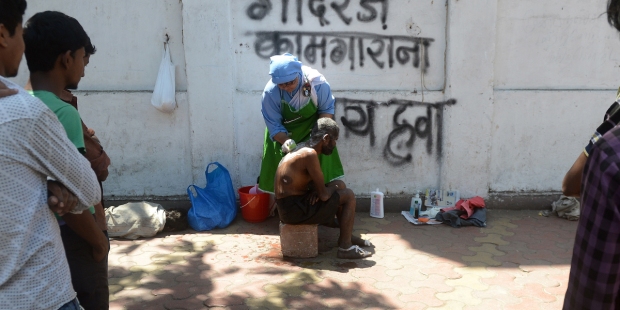
This chapter is summarized in the story of Patricia, which exemplifies a hermeneutical pedagogy aimed at avoiding harm, healing, liberating, and forming kind people. Patricia came to the community with a Bible that she could not open without feeling a lump in her throat. She came from a religious environment where texts were used to monitor her, correct her, and remind her that she was never good enough. There, she had been told repeatedly that “the heart is deceitful” (Jeremiah 17:9, NIV) to invalidate her emotions and that “the Lord disciplines those he loves” (Hebrews 12:6, NIV) to justify humiliation.
Over time, these interpretations caused her deep moral injury: she began to believe that her essence was flawed, that her pain was sinful, and that her dignity was negotiable. She was filled with shame and became hypervigilant. A psychiatrist eventually diagnosed her with post-traumatic stress disorder (connected to religious trauma), and for months she needed medication and psychotherapy to stabilize. The Bible, which should have been a place of encounter, had become dangerous territory for her.
The first time she attended the Bible study group at her new faith community or church, she sat near the door in case she needed to leave. The facilitator began with a simple question: “Where are you?” (Genesis 3:9). It was not a test, but an invitation. Patricia did not respond aloud, but she felt that, for the first time, someone did not want to know what she believed; rather, they wanted to know how she was doing. That question opened up a safe space. The community’s hermeneutical pedagogy did not begin with doctrine, but with presence. It was not about explaining the text, but about accompanying those who listened to it.
Over time, Patricia began to share fragments of her story. She spoke of the fear she felt when she heard verses about obedience, of the weight of guilt she had carried since childhood, of the nights she cried, thinking that God was disappointed in her. The community neither corrected her nor rushed her. They listened to her holistically (trustingly, sympathetically, and thoughtfully). Moreover, in that listening, something began to heal. “The Lord is close to the brokenhearted” (Psalm 34:18, NIV) ceased to be an abstract verse and became an embodied experience. The community became a space where traumatic memories could be named without fear of judgment.
At one of the meetings, the group read a passage that had previously been used to hurt her: “Be perfect” (Matthew 5:48, NIV). The facilitator explained the context, the metaphor, the intention, and, above all, the distinction between perfectionism and wholeness. Patricia cried silently. Not because the text accused her, but because, for the first time, it did not crush her. The moral injury she had carried for years—the feeling that she would never be enough for God—began to crumble. The community did not tell her how she should feel; it offered her a space to reinterpret her story without betraying her conscience.
As the months passed, Patricia discovered that the community not only healed but was also liberated. The leaders did not demand that she think the same way as everyone else. The Bible teachers did not use the Bible to control her life. On the contrary, they encouraged her to ask questions, to express doubts, and to explore new interpretations. “For freedom Christ has set us free” (Galatians 5:1, NIV) ceased to be a slogan and became a concrete experience. The community did not push her toward an idealized version of herself; it accompanied her toward a more dignified, more just, more authentic life.
The transformation was not immediate. There were days of setbacks, moments of fear, memories that returned without warning. Nevertheless, the community remained. The constant presence—that presence that does not demand, that does not pressure, that does not abandon—became the ground on which Patricia was able to rebuild her relationship with God and with herself. She discovered that kindness was not a moral obligation, but a way of breathing. “Be kind and compassionate to one another” (Ephesians 4:32, NIV) was something she saw embodied every week in those around her.
One day, during a casual conversation after the study, a new woman joined the group. She sat in the same chair, near the door, with the same tension in her shoulders that Patricia had had months earlier. Patricia looked at her and recognized the look. She approached slowly, without invading, and said, “If you want, I can sit with you.” She did not quote the verse. She did not give advice. She just offered her presence. The woman took a deep breath and nodded.
In that simple gesture—a chair moved, a presence offered, a silence shared—was condensed everything this chapter has sought to teach. Patricia, who had arrived wounded by interpretations that caused trauma and moral injury, now embodied a hermeneutic of love and justice. The community that had healed and liberated her had become the space where she herself cultivated kindness. Not because it was demanded of her, but because kindness had taken root in her life.
Thus, Patricia’s story serves as a living testament to what happens when the Bible is taught without causing harm: interpretation becomes an act of dignity, community becomes a place of healing, freedom flourishes, and kindness becomes contagious. This case not only closes the chapter but embodies it. It is evidence that the hermeneutics of love and justice is not a theory, but a practice that transforms lives.
Conclusion
Reading and teaching the Bible without causing harm is, above all, an act of ethical and spiritual responsibility. It is not only a matter of mastering exegetical techniques or transmitting doctrinal content, but also of cultivating an approach to the text that honors human dignity, recognizes the fragility of the reader, and allows Scripture to be a space of encounter rather than one of oppression. The hermeneutics of love and justice remind us that all interpretation is relational: it involves stories, memories, wounds, hopes, and concrete bodies seeking meaning. Therefore, biblical pedagogy cannot be reduced to merely repeating inherited meanings; it must accompany human processes in which the text can heal, liberate, and guide without imposing burdens that destroy consciousness or fracture identity.
Avoiding psychological trauma and moral injury is not softening the Bible, but reading it with the depth demanded by a text that was born amid struggles, pain, and searches for meaning. Scripture contains diverse voices, tensions, and memories that require pastoral sensitivity and an ethic of care. Teaching without causing harm entails recognizing that specific passages can reawaken old wounds and that the interpreter’s task is to create a safe space in which the reader can dialogue with the text without fear of being judged, silenced, or blamed. The Bible itself offers models of this accompaniment: God who asks questions, Jesus who listens, prophets who lament, communities that bear their pains together.
Likewise, a caring reading recognizes that interpretation is a communal act. Communities that heal and liberate do not use the Bible to control, but to accompany; not to impose uniformity, but to open paths of justice, compassion, and truth. Where presence becomes hospitality, where vulnerability is welcomed with dignity, and where justice is practiced as a way of life, the Bible regains its capacity to be a source of life and not of oppression. The hermeneutics of love and justice invite us to read from a place of freedom, responsibility, and hope, reminding us that the truth that liberates is not a rigid doctrine, but a relationship that dignifies.
Teaching people to read the Bible without causing harm is, ultimately, a commitment to life. It is recognizing that the sacred text can be an instrument of profound healing when read with humility, sensitivity, and openness, and that it can become a weapon when interpreted carelessly. Therefore, the hermeneutical pedagogy we propose does not seek to control meaning but rather to accompany its emergence; it does not claim the last word but instead opens a dialogue in which the reader can encounter God, themselves, and others from a place of dignity and freedom. Reading in this way is an act of love; teaching in this way is an act of justice. In that encounter, the Bible returns to being what it always sought to be: a life path.
References
Andiñach, P. R. (2011). El Dios que está. Editorial San Pablo.
Armstrong, K. (2011). Twelve Steps to a Compassionate Life. Knopf.
Armstrong, K. (2007). The Bible: A biography. Atlantic Books.
Boisen, A. (1936). The Exploration of the Inner World. Harper & Brothers.
Boff, L. (2002). Knowing How to Care: Ethics of the Human, Compassion for the Earth. Editorial Trotta.
Buber, M. (1970). I and Thou (W. Kaufmann, Trans.). Charles Scribner’s Sons.
(Original work published in 1923)
Ellis, A. (1962). Reason and Emotion in Psychotherapy. Lyle Stuart.
Fox, E. (1995). The Five Books of Moses. Schocken Books.
González, J. L. (1996). Holy Bible: The Bible through Hispanic Eyes. Abingdon Press.
Herman, J. (1992). Trauma and Recovery. Basic Books.
Heschel, A. J. (1955). God in Search of Man: A Philosophy of Judaism. Farrar, Straus and Giroux.
hooks, b. (1994). Teaching to Transgress: Education as the Practice of Freedom. Routledge.
Litz, B. T., Stein, N., Delaney, E., Lebowitz, L., Nash, W., Silva, C., & Maguen, S. (2009). Moral injury and moral repair in war veterans: A preliminary model and intervention strategy. Clinical Psychology Review, 29 (8), 695–706.
Nouwen, H. J. M. (1979). The Wounded Healer: Ministry in Contemporary Society. Image Books.
Quijano, A. (2000). Coloniality of power, Eurocentrism, and Latin America. Nepantla: Views from South, 1(3), 533–580.
Shay, J. (1994). Achilles in Vietnam: Combat Trauma and the Undoing of Character. Scribner.
Trible, P. (1984). Texts of Terror: Literary-Feminist Readings of Biblical Narratives. Fortress Press.
van Manen, M. (1990). Researching lived experience: Human science for an action sensitive pedagogy. State University of New York Press.
Yalom, I. D. (1980). Existential Psychotherapy. Basic Books.